For the past 10-15 years, leading power equipment dealers have adapted their businesses to capitalize on the growing lawn maintenance contractor market. But today’s contractors are different. They provide different services and have different needs. Will dealers be forced to adapt further?
Forced might be a strong word. Dealers with solid brands of core equipment, along with equally solid parts and service operations, fulfill a very important need for maintenance contractors. However, as more established contractors look to bring at least some of their equipment maintenance and repairs in-house, many leading dealers have expanded their aftermarket support to include on-site service, parts delivery and even technical training.
Many dealers have also broadened their inventories to include a variety of products lawn maintenance contractors need as they expand and grow their businesses. Equipment such as mini skid steers, tractors, attachments and aerators complement products such as fertilizer, mulch and hardscaping supplies.
AN EVOLVING INDUSTRY
In the mid- to late-90’s, demand for basic lawn services grew as an increasing number of dual-income households had less free time to do their own yard work. As a result, lawn maintenance contractors began sprouting up all over the country. Then, as the housing and construction markets took off in the 2002-2004 timeframe, many of these same contractors began branching into landscape installation.
The miserable housing market and deteriorating economic conditions over the past couple of years have contractors focused on the more recession-proof business of lawn maintenance again. But uncontrollable factors such as drought, tighter customer budgets, and pricing pressure from a mounting number of competitors have most established contractors grounded in the realization that diversity is likely their best way forward—in terms of both customer retention, sales growth and profitability.
There is another dynamic at play that could impact how your landscape customers operate. As the concept of “eco-friendly landscaping” gains more widespread acceptance, some homeowners and landscape designers are questioning just how much lawn should be part of a landscape. Replacing turf with more drought-tolerant elements such as extended patios, mulch, native shrubs and vegetable gardens reduces the need for fertilization, irrigation and the operation of power equipment.
However, the average American’s affection for a lush, green lawn will be a tough cookie to crumble. That’s why some landscape designers are simply switching to grass types that demand less water. Furthermore, organizations such as the Outdoor Power Equipment Institute (OPEI) have made a strong case for the importance of turfgrass in the ecosystem. (Properly managed turfgrass helps sequester carbon emissions, capture stormwater run-off, and mitigate the heat island effect.)
But make no mistake, today’s consumers want a more sustainable yard—a yard which they also view as a “backyard retreat.” According to a Global Lawn & Garden Trend Report recently presented by Husqvarna, 38% of U.S. homeowners want a yard that is entirely self-maintaining, while 37% say they view their backyard as a “retreat area.”
What does all this mean for landscape contractors? There’s an opportunity to extend their basic lawn maintenance services to include turf renovation, IPM (integrated pest management) and perhaps even organic lawn care, along with opportunity to branch into new installation services with a relatively low barrier to entry.
What does this mean for landscape suppliers such as equipment dealers? There is an increasing need for lower-emission equipment; high-tech irrigation products; organic-based fertilizers; outdoor lighting, hardscaping and waterscaping supplies; and turf renovation equipment such as aerators and dethatchers to help lawn maintenance contractors practice IPM and improve the health of turf.
VENDORS FACILITATE THE EVOLUTION
“Especially in the Southwest where drought is quite common, lawn maintenance contractors are always looking for alternative revenue sources,” says Phil Stevens, vice president of sales and marketing for Horizon. “We’re constantly talking to contractors about how we can help them break into new services, make them more profitable and help them provide more value to their customers. In some cases, it’s simply helping them get into a business with a low barrier to entry, such as outdoor lighting, waterscaping or hardscaping.”
Horizon is a professional distributor that sells a variety of products and services to landscapers through its 65 stores in 11 states, 14 of which include service centers (horizononline.com). Among the company’s product offering is Toro, Exmark, Echo and Shindaiwa power equipment; Rain Bird, Hunter and Irritrol irrigation equipment; Monsanto fertilizers; and a variety of landscape lighting and waterscaping products.
Horizon also recently entered the hardscaping business through a partnership with Pavestone Company. Pavestone manufactures segmental concrete products including pave stones, retaining wall units, edgers and stepping stones.
“I think the hardscaping business will continue to grow, and more landscape contractors will branch into it,” Stevens relates. “With the innovations in paver products, in terms of texture, color, look and feel, they’re becoming a viable alternative to concrete. The addition of Pavestone products further strengthens our offering and makes us more of a one-stop shop to landscapers.”
Since landscapers are pretty hands-on people, Stevens says most have a relatively easy time picking up the necessary skills to branch into lighting, waterscaping and even basic hardscaping. “You could teach them the actual application in one day’s training, and then spend a second day teaching them how to sell the service,” Stevens relates.
According to Steve Jones, president of Pave Tech (pavetech.com), the dealer network is critical when it comes to educating the contractor. “The contractor expects their vendors to be experts,” Jones adds. “So if you’re thinking about becoming a hardscape supplier, there needs to be a real commitment. You can’t just dabble in it.”
Jones says “dabbling in it” is not ensuring that your employees have the knowledge base, and selling only a limited range of product. “You have to think like a contractor, and contractors think in terms of systems,” Jones points out. “You need to sell the complete system—and become the hardscape supplier to that contractor.”
As is always the case, it helps to be a large retailer that can buy in larger volumes. However, Jones says single-location equipment dealerships can also make a good run in hardscaping if current landscape customers are performing the service or seriously considering it. Dealers also need adequate lot space to store the inventory, along with a forklift or loader to transport the pallets of materials, etc. It’s all about being price-competitive and, more importantly, making things more convenient for the landscaper.
Landscaper Evolution, Equipment Needs
It’s important to understand the typical “landscape contractor evolution.” Generally speaking, most contractors start out in lawn maintenance, but eventually begin offering various installation services—often at their customers’ request. At the same time, maintenance contractors who are intentionally looking to diversify and grow their businesses are finding out that “satisfied maintenance customers” are the easiest to sell landscape enhancements to.
In either case, opportunity exists for the dealers these contractors have been buying their maintenance equipment from. Below is data from a recent study of PRO Magazine readers (landscape contractors):
| Equipment Type | Own | Rent | Plan to buy in next three years |
|---|---|---|---|
| Loader | 44% | 18% | 17% |
| Compact Tractor | 42% | 13% | 18% |
| Implements | 57% | 13% | 34% |
| Chipper | 23% | 19% | 13% |
| Stump Remover | 8% | 24% | 8% |
| Concrete Saw | 35% | 11% | 12% |
| Compacter | 28% | 10% | 9% |
| Aerator | 62% | 12% | 20% |
| Chemical Sprayer | 67% | <1% | 22% |
| Granular Spreader | 79% | <1% | 17% |
| Trencher | 29% | 14% | 12% |
| Tiller | 56% | 7% | 11% |
Here’s a look at some of the other more revealing statistics from the PRO study:
• Nearly 2/3 of landscape contractors have annual sales under $500,000, while only 1/5 have annual sales in excess of $1 million
• Roughly 1/4 of contractors have been in business less than five years, but more than half have been in business at least 10 years
• 72% of landscapers say they perform their own basic equipment maintenance, while another 19% say they also handle their own repairs
• 3/4 of maintenance contractors also offer design/build, 2/3 perform hardscaping, and roughly 1/3 install outdoor lighting and water features
• 45% of landscapers who’ve been in business less than five years do not perform hardscaping, compared to only 30% who’ve been in business more than five years
SOURCE: August 2008 survey of PRO Magazine subscribers. To receive a copy of the complete report, send an email to [email protected].
MORE OPPORTUNITIES FOR DEALERS
That’s what Cincinnati-based Klei Mower has been doing for its landscape customers: making things more convenient by reducing the number of vendors they must deal with. Klei Mower began selling mulch a couple of years ago.
“Mulch sales have been getting better each year, turning into a very profitable segment of our business,” says owner Dennis Klei. The key has been carrying a very high-quality product—word of mouth then does the rest. “The only advertising we do is our phone system’s on-hold message,” Klei points out.
There is also plenty of equipment you can sell to help your landscape customers branch out and grow their businesses—some of which isn’t a far stretch from what you’re already doing. Products such as aerators, edgers, tillers, trenchers, sprayers and spreaders enable contractors to offer services that are a natural extension of landscape maintenance. Compact construction equipment such as mini skid steers, tractors and implements will help them break into installation and hardscaping. And remember, renting these types of equipment is a great option.
Many dealers are also finding success with products that don’t necessarily help their landscape customers sell more services, but rather, simply fill a need. Items such as personal protective equipment (PPE), work boots and hand tools contribute significantly to many dealers’ revenue and profit streams.
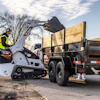
Trailers are another good example. In an August 2008 survey of PRO Magazine subscribers (landscape contractors), 94% of landscapers said they own a trailer, and 36% said they will purchase at least one more within the next three years. The question is: Where will they buy them?
Crane’s Outdoor Power Equipment in Canaan, CT, began selling trailers in 2001. “We had a few inquiries from landscapers about where they could purchase trailers locally,” says Rich Crane J r. “There weren’t any trailer dealers close to us, so I thought, ‘Why don’t we start selling them?’ Really, it makes perfect sense. With the size of today’s equipment, you don’t see the typical commercial user putting a mower in the back of his truck anymore.” (See callout below.)
Branching into new product areas takes time and patience, not to mention a carefully thought-out strategy. Leading dealers are doing it, because the landscape is changing. The more you can sell to help your landscape customers adapt and thrive, the better off you both can be.
TIPS ON SELLING TRAILERS
If you’re a landscape equipment dealer looking for another product you can sell to contractors, trailers represent an often overlooked landscaper staple. A leading Connecticut dealer shares some valuable insight as to how you can cautiously, and effectively, break into the trailer market.