Many in the small-business community fear that the next four years will usher in an onslaught of new regulations, several of which could have a negative impact on small businesses. Case in point: Small Businesses for Sensible Regulations, sponsored by the National Federation of Independent Businesses, predicts that some 4,128 new regulations are "in the pipeline" and could be enacted over the next four years.
These potential new regulations apply to a wide range of activities, many of which would either directly or indirectly affect the Green Industry. Examples include:
- EPA stormwater revision to tighten controls on stormwater discharges from developed sites; this could actually help create landscaping opportunities in the way of green roofs, rain gardens and permeable paving
- EPA updated certification requirements for pesticide applicators in hopes of better protecting both the applicator and the general public
- Department of Labor's proposed changes to crystalline silica dust exposure guidelines
- Department of Labor's proposed update to nondiscrimination in compensation guidelines, in addition to a new compensation data collection tool.
We talked to three leading Green Industry organizations to see what the regulatory environment could specifically have in store for the equipment, irrigation and landscape contracting segments of the industry in 2013.
What equipment makers are watching
Kris Kiser, president and CEO of the Outdoor Power Equipment Institute (OPEI)—the association of small engine and equipment manufacturers—says his group is paying close attention to fuel-related issues, particularly with respect to ethanol.
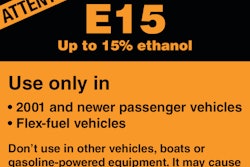
First and foremost, OPEI is worried about the proliferation of ethanol E15 in the marketplace this year. E15 will damage small engines that are used to power lawnmowers and other lawn equipment.
Something known as “engine certification fuels” is also an issue. Manufacturers must earn an engine certification from EPA. The problem is that EPA is still saying to use an ethanol-free fuel for the testing on smaller engines for handheld equipment. But gasoline with 10% ethanol is what is most commonly found in the marketplace today.
Why is that a problem? “With carbureted engines, you have about a 10% design window,” Kiser explains. “So if we’re testing engines with 0 ethanol fuel, those engines are right on the edge and run very lean when powered by E10 out in the field. And we already know that E15 is not approved for small engines—yet EPA says it wants E15 to become the dominant fuel in the marketplace.”
To further complicate matters, Kiser says EPA and CARB (the California Air Resources Board) are not on the same page when it comes to E15. “CARB wants more testing on E15 and says it will be several years before it gets into the California market,” Kiser says. “This all gets very challenging for engine and equipment manufacturers.”
A few years ago, manufacturers faced a huge challenge when several had engines they were importing from overseas seized at customs. The manufacturers thought they were importing emissions-compliant engines, but EPA decided that the engines didn’t meet their tamper-resistance guidelines, prompting OPEI to develop a new guidance document for manufacturers to follow.
OPEI worked closely with EPA and others to develop the guidance, so Kiser feels fairly confident that this type of issue won’t arise again. “But you just never know when it comes to this type of thing,” Kiser adds. “Our manufacturer members are OK with regulations, so long as they know what they’re dealing with. Changing horses in the middle of a race is very challenging.”
What landscape contractors should be watching
In addition to engine fuel- and emissions-related issues—which add complexity and cost to the manufacturing process—OPEI is also looking to play a role in advocating for sound policies that directly affect a primary user group of its equipment: landscape contractors. OPEI will maintain a vigilant eye with respect to localized leaf blower bans. Also, any green-building codes that limit the use of turfgrass are also of concern.
Tom Delaney, PLANET's director of government affairs, remains troubled by the ongoing saga of proposed H-2B guest worker visa rule changes, which would make it more costly and cumbersome for contractors to acquire seasonal temporary immigrant workers. The rule changes were supposed to have been implemented more than a year ago. However, the "program rule" change continues to get delayed due to ongoing court proceedings. The "wage rule" change remains blocked until March 27 due to a continuing resolution, which was passed by Congress and signed by President Obama this past October.
Regardless of how the drama surrounding H-2B eventually plays out, Delaney says PLANET will work with Congress to ensure that any plans for immigration reform in 2013 take into account the unique labor needs of seasonal employers such as landscape companies.
Delaney is also concerned about regulations relating to pesticide labeling. Inconsistency between updated OSHA guidelines and EPA (FIFRA) guidelines will likely cause confusion in the marketplace. For instance, a safety data sheet (OSHA) will have the words "danger" and "warning" on it, while the product label (EPA) will have the word "caution". "It is important that (OSHA and EPA) implement coordinated approaches to regulation so that regulated industry has a clear pathway to be in compliance with both agencies’ requirements," Delaney points out.
What the irrigation industry is watching
The landscape irrigation industry earned a big victory last year when EPA WaterSense decided to remove its 40% turfgrass limitation for new homes. “This actually took effect on January 1 of this year, and that’s great,” says John Farner, government affairs director of the Irrigation Association (IA).
IA says another positive development is that WaterSense has begun labeling weather-based controllers as products that save water without sacrificing performance or quality. “This year we’re hoping to get the ball rolling on soil-moisture sensor-based controllers,” Farner points out.
Also this year, IA will continue working with the newly formed Senate Water Caucus. “Led by Mark Pryor (D-AR) and Jerry Moran (R-KS), the Caucus is looking to enhance education of U.S. Senators on planning for drought and drought mitigation,” Farner says. As part of this effort, the Caucus will explore emerging technologies, conservation opportunities, and improved coordination between federal, state and local government.
At the state level, Farner says IA will continue to look for opportunities to improve irrigation contractor licensing legislation. The overarching goal is to ensure that contractors are qualified to perform irrigation installations and repairs, and that consumers know it. That also means that a qualified irrigation contractor should not also be expected to be a landscape architect or plumber, for example. This very issue arose in Oregon last year.
More specifically, IA is supporting the Florida Irrigation Society’s effort to work with its state government to establish a good voluntary license. Also, in Illinois, IA is hoping to play a role in developing long-term licensing legislation. The current license expired at the end of last year, but the governor signed a one-year extension to continue it through this year. “We’re looking forward to working with the state of Illinois and the Illinois Green Industry to develop new legislation in 2013,” Farner says.