For many homeowners, lawn-care decisions are still driven by the calendar, the air temperature or the simple fact that a neighbor started working on their yard. A few warm days arrive in spring, and the phone starts ringing. Clients want to seed. They want to water. They want to apply products. They want to know why their lawn is not greening up yet.
For professional landscapers and lawn-care service providers, those conversations are familiar. The challenge is that air temperature alone does not tell the full story. A warm afternoon may feel like spring, but the soil can still be lagging behind. Likewise, a cool day does not always mean the soil profile has cooled enough to change the timing window.
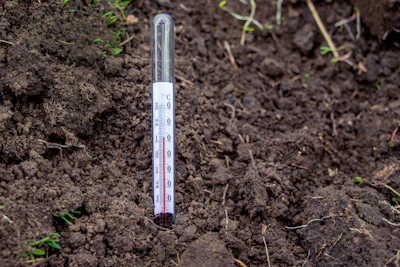
That is why soil temperature deserves a more consistent place in the lawn-care decision-making process.
Soil temperature is not a replacement for experience, site observation, product labels, university extension guidance or regional knowledge. But it can give lawn-care professionals another useful signal — one that helps connect what is happening below the surface with the timing decisions being made above it.
The gap between air temperature and soil temperature can be especially important during seasonal transitions.
Air Temperature Can Mislead Timing Decisions
Air temperature is easy to observe, so it often becomes the default signal. Clients feel a warm day and assume it is time to seed, fertilize, water or expect green-up. But the lawn does not respond only to what is happening in the air. Root activity, seed germination, microbial activity, moisture behavior and seasonal growth transitions are all connected to soil conditions.
The gap between air temperature and soil temperature can be especially important during seasonal transitions. In early spring, air temperatures may rise quickly while soil warms more slowly. In fall, soil may retain warmth even after air temperatures begin cooling. Shaded areas, irrigated areas, compacted soils, slopes and different soil types can also behave differently within the same property.
For pros, this matters because timing affects customer expectations and work quality. If the ground is not ready, the best advice may be to wait. If conditions are moving in the right direction, the conversation can shift from “not yet” to “start preparing.”
Instead of saying, “It is too early,” or “We usually seed around this time,” pros can explain that seed success depends on whether the soil environment is becoming favorable for germination and root development.
Soil Temperature & Seed Establishment
Seeding and overseeding are two areas where soil temperature can be especially useful. Successful establishment depends on more than simply putting seed down before or after a certain calendar date. Soil conditions, moisture, nighttime temperatures, rain patterns and forecast trends all influence whether seed has a reasonable chance to germinate and establish.
For lawn-care professionals, soil temperature can help frame the conversation with clients. Instead of saying, “It is too early,” or “We usually seed around this time,” pros can explain that seed success depends on whether the soil environment is becoming favorable for germination and root development.
That context matters. It also helps protect the professional relationship. A client may be eager to seed after a warm weekend, but soil temperature trends may suggest that waiting could lead to a better result. On the other hand, in a favorable window, soil temperature can support the recommendation to act before conditions shift.
The value is not just technical. It is communicative. Soil temperature gives professionals a practical way to explain why timing matters.
Soil temperature trends, weather forecasts, product labels, historical knowledge and site conditions should all work together.
Pre-Emergent Timing Awareness
Pre-emergent applications are another timing-sensitive area where soil temperature can be helpful. Lawn-care professionals already understand that product labels, local conditions and regional weed pressure must drive application decisions. But soil temperature trends can still serve as a useful planning signal.
Rather than relying only on a date on the calendar, pros can monitor soil temperature trends to understand whether a seasonal window may be approaching. This can support scheduling, customer communication, inventory planning and crew readiness.
The goal is not to reduce pre-emergent timing to one number or one day. The goal is to add context. Soil temperature trends, weather forecasts, product labels, historical knowledge and site conditions should all work together.
For clients, this can also make the service feel more professional. When a provider can explain that timing is being guided by soil conditions and forecast trends, not guesswork, the recommendation carries more credibility.
Using soil temperature as part of the conversation helps pros talk about green-up as a process rather than a switch.
Green-Up & Active Growth
Spring green-up is one of the most visible points of customer expectation. Clients see warmer weather and expect the lawn to respond immediately. When it does not, they may assume something is wrong.
Soil temperature can help professionals explain what is happening. Turf growth and recovery are influenced by conditions below the surface, not just the daytime high. Depending on grass type, soil conditions, moisture and recent weather, lawns may respond differently even within the same service area.
This is especially useful for managing expectations. A lawn may be moving toward active growth, but visual response can lag. Or, conditions may be supportive in one part of a property while shaded or compacted areas remain slower to respond.
Using soil temperature as part of the conversation helps pros talk about green-up as a process rather than a switch.
Rather than simply telling a client to water more or less, pros can explain why the recommendation fits the current conditions.
Watering Strategy & Forecast Context
Watering decisions can also benefit from soil and forecast context. Too often, watering advice is reduced to a fixed schedule. But the need for water changes with rainfall, soil moisture behavior, evapotranspiration pressure, heat, wind, irrigation type and recent lawn activity.
Soil temperature does not answer every watering question by itself, but it contributes to the broader picture. Warmer soil and rising heat pressure may increase stress risk. Recent rainfall may reduce watering pressure. Forecasted rain may support a recommendation to hold off. Irrigated lawns and rain-fed lawns may require different communication.
For professionals, the value is in combining signals. Soil temperature trends, recent rain, upcoming weather and site observations can help guide whether watering is urgent, unnecessary or something to monitor.
That same context can help with client education. Rather than simply telling a client to water more or less, pros can explain why the recommendation fits the current conditions.
Better Client Communication
One of the most valuable uses of soil temperature may be communication.
Clients often want simple answers: Is it time to seed? Should I water today? Why is my lawn not green yet? Is it too early to apply something? Should we wait until next week?
Soil temperature gives professionals a better way to explain those answers. It turns timing conversations into condition-based conversations.
Instead of saying, “We usually wait,” a provider can say, “The soil is still trending cooler than we would like for that work, but the forecast suggests conditions may become more favorable soon.”
Instead of saying, “Do not water,” a provider can say, “Rain is expected, and current conditions do not suggest watering is urgent right now.”
That kind of communication builds trust. It also helps clients understand that timing is not arbitrary. It is part of the service.
The key is not to treat soil temperature as a magic answer. It is a signal.
Bringing Soil Temperature Into the Workflow
Professionals do not need to overhaul their entire process to use soil temperature more effectively. It can be introduced as a simple check alongside existing workflows.
- Reviewing soil temperature trends before recommending seeding or overseeding
- Using forecast trends to prepare for upcoming timing windows
- Comparing soil conditions across different properties or microclimates
- Documenting site observations alongside soil and weather conditions
- Explaining timing decisions to clients with condition-based language
- Using soil temperature as one input alongside product labels and local expertise
The key is not to treat soil temperature as a magic answer. It is a signal. When combined with professional judgment, site knowledge, weather forecasts and proper product guidance, it can help make timing decisions more consistent and easier to explain.
Using soil temperature can support better decisions, better scheduling, better client communication and more confidence in the timing of seasonal work.
The Role of Digital Tools
Digital tools can also help make soil temperature easier to use in the field. Technologies designed for this purpose were built to help users view soil temperature, forecast trends, frost risk, saved locations and lawn or garden activity in one place. The larger opportunity is not just showing more data, but helping professionals and homeowners turn soil conditions into clearer timing conversations.
For service providers, that kind of visibility can support better client conversations. When a customer asks why seeding should wait or why watering may not be needed before incoming rain, soil and forecast context can help explain the recommendation in practical terms.
Lawn care is full of timing decisions. Some are routine. Some are seasonal. Some are weather-driven. Some depend on what happened at the property last week.
Soil temperature is not the only factor that matters, but it is one that should be part of the conversation more often.
For landscapers and lawn-care service providers, using soil temperature can support better decisions, better scheduling, better client communication and more confidence in the timing of seasonal work.
The lawn may be above ground, but many of the signals that matter start below the surface.