Since reaffirming its “servicing dealer only” distribution model roughly a decade ago, STIHL Inc. has doubled in size, amassed a network of 8,000-plus U.S. independent servicing dealers, and is now recognized as the largest-selling handheld OPE brand in America.*
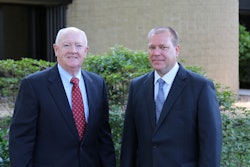
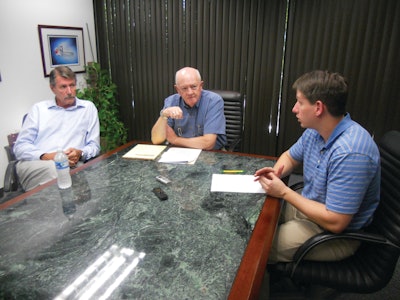
Two of the key architects behind the servicing dealer-only business model in the U.S.—president Fred Whyte and vice president of sales and marketing Peter Burton—share some thoughts on how they’ve done it, and how they’ll continue doing it despite the fact that the economic outlook is filled with uncertainty, population growth is slowing, consumer buying habits are changing, and the total number of available dealers continues to shrink.
Q: In the 2000-2002 timeframe, when many of the other big names in the outdoor power equipment industry had concluded that venues such as Home Depot and Lowe’s would be essential to capturing consumer sales, what gave STIHL the courage to do the opposite?
FW: Both Peter and I had been in the industry a long time. We saw what happened to some other companies, namely Homelite and McCulloch in the handheld segments. Combined, they probably had 80% of the chain saw market at one time. But when they went into the mass channel, they cheapened their product to accommodate a mass market. As a consequence, their entire brands were eroded. People thought they were buying the same high-quality product that existed years ago, but they weren’t.
We recognized that fact and decided that STIHL couldn’t try to be all things to all people. We’ve been very successful in the dealer channel. Things maybe go a bit slower and a little more deliberately, but we’ve been successful. I can honestly say that we have never seriously considered going the way of the mass channel.
PB: You have to remember that this is not a new philosophy. All we’ve done for the past 10 years is to stay the course we set nearly 40 years ago. We were profitable and growing our position in the marketplace. We knew that if we could remain in the position we were in, maintaining credibility with dealers and helping them grow both professionally and personally, we had all the faith in the world that we could continue growing.
Q: In the mid-2000s, just a few years after STIHL’s bold “Why?” campaign announced where you can’t buy STIHL products and promoted independent servicing dealers, we began to see the emergence of the “pro-sumer” market. As a result, have consumer lawn and garden sales shifted back to the dealer channel at all?
FW: That’s hard to measure. I can say that a very large percentage of our consumer end-users are second-time buyers. They bought on price the first time. But they weren’t shown how to load the trimmer line, sharpen the chain or adjust the carburetor. Furthermore, it doesn’t matter whose product you bought, eventually it’s going to require service. This is where dealers continue to have the advantage.
PB: Yes, there is a large market of very price-sensitive shoppers. But there’s also a large market of consumers who want something better than they’ve owned before. The bitterness of poor quality remains long after the sweetness of low price.
Q: Would you point to the “Why” campaign as the “aha moment” where consumers started to draw a distinction between dealer-sold product and big box-sold product?
PB: That was just the tip of the iceberg. Our investment, for example, in dealership merchandising systems was tremendous. We needed consistency across dealerships, and it needed to be retail-friendly.
But the “Why” campaign was definitely important. We had research that said 60% of consumers thought we were in Home Depot and Lowe’s. That was something we had to correct. The “Why” campaign also told our dealers that we weren’t going into the mass channel. There are always rumors, but this helped put some of these concerns to rest.
The iCademy online dealer training program has been another important investment. We would need an army to educate all of our dealers, whether that education was of a technical nature or simply on the features and benefits of our products. We have one person, John Keeler (national training manager for STIHL Inc.), who has done an outstanding job with this program.
Also with respect to advertising, our marketing advantage co-op program, which allowed area dealers to take out full-color, full-page ads in local newspapers, was very effective in building awareness among consumers. This is a big reason why we have dealers selling a lot of equipment to consumers, dealers who would have never thought about the consumer market 10 years ago.
FW: Another thing the marketing advantage program did was make consumers aware that STIHL products were available at a wide range of price points. I had friends and neighbors who would apologetically tell me they bought a new chain saw, but they didn’t buy one of ours. “I just didn’t need one that good,” was often the explanation. So I’d ask: “How much did you pay for it?” Their response: “$149.” My response: “Well, we have saws that start at $179. Wouldn’t you have rather paid another $30 to get a STIHL?” The marketing advantage program did a lot to correct this false perception that our products are too high-priced for the average consumer.
The marketing advantage program also did a lot to change the way dealers viewed each other. It took some time, but they eventually realized that the other dealer across town was a competitor, yes, but a competitor on a like basis; he offered service and had technicians, stocked parts and so on. The real competitor is the big box. Dealers are realizing that to gain market share from the box stores is the best way forward.
Q: Mass retailers such as Sears and Home Depot are now marketing commercial-grade zero-turn riding mowers. Are dealers going to have another fight on their hands when it comes to public perception, i.e. “you don’t have to go to a dealer if you want a more durable, higher-end piece of equipment”?
PB: I can only speak from STIHL’s perspective in the handheld arena. The dealer has become more relevant in the buying consideration of the consumer over the past 10 years. The dealer is the expert. In the past, the decision was often price-driven. That’s still the case in a lot of circumstances, but not as much. And the desire to get the best value for the money has heightened with the tough economic times we’ve seen the past few years.
Q: There are not as many dealers today as there were 20 or even 10 years ago. If the number of dealers continues to shrink, is this going to present a problem for STIHL?
FW: What’s interesting is that we’ve gone against that grain so far. Our dealer count has actually been increasing every year. We have more dealers than we did 10 years ago.
Q: What role have hardware stores played in your ability to increase your dealer base?
PB: More and more hardware stores are seeing the value in putting in a service counter. We will not do business with them unless they do. Hardware store owners are very smart businesspeople; they have to be to survive in that business. They, too, want premium lines which the box stores don’t have. And they are independently owned and operated.
We’ve also found that the typical hardware customer is different from the typical OPE dealer customer. And hardware stores also provide access to our products and accessories when the majority of OPE dealers are not open on the weekends.
FW: Keep in mind that our product does not appear in hardware store franchise catalogs, like ACE Hardware or Do It Best Hardware. Each store is set up with its own account, just like a dealer is. It’s then up to the individual store to sell and service STIHL product or not. Individual hardware stores are treated just like OPE dealers and conduct business like those dealers.
Q: What role has your marketing relationship with John Deere played in your ability to add dealers and grow sales?
FW: Clearly, our affiliation with John Deere has had something to do with it. And frankly, this relationship in general has exceeded our expectations. But sales is only one element. The culture of the two companies has also been a nice blend. The cooperation level of their senior management team has been stellar. The entire organization is a class act.
Deere has also told us that they’ve been surprised by the success they’ve enjoyed. Many Deere dealers tell us they’ve sold more STIHL product in a month than they ever sold of John Deere handheld in years.
PB: Remember, we’ve always had some John Deere dealers selling STIHL product. The effort that was launched in 2008, following Deere’s decision to exit the handheld market, just helped accelerate things.
Q: Did you experience a lot of blowback from existing STIHL dealers when the alliance with John Deere was rolled out?
FW: We had some instances where dealers were naturally upset. To the best of my recollection, we lost two dealers nationally. What’s interesting is that for many of the dealers who were initially upset, we said, “Let’s just wait a year and see what happens.” What happened in most instances was that everybody grew; both the existing STIHL dealer and the John Deere dealer now selling STIHL.
PB: John Deere customers tend to be very loyal to the John Deere brand, so STIHL is able to capitalize on that loyalty and gain new customers by being in these dealerships.
FW: Once you take the emotion out of it, step back and look at things from a business perspective, one’s perspective will often change. I believe that time has vindicated the decision we made.
Q: When we launched the Dealer Success Guide more than 10 years ago, the average dealer needed help in the discipline of business management. STIHL took steps to help dealers improve by launching initiatives such as the Retail Readiness Program. Going forward, how is STIHL going to continue helping its dealers to compete, profit and prosper?
PB: We will continue to offer assistance to our dealers to help them market and manage their businesses. There are still those who need help in these areas, including new dealers who’ve never been in this business.
That said, today’s typical STIHL dealer is a much stronger business manager than he was 10 years ago. Plus, you now have second- and third-generation owners who are raising the bar even higher.
FW: Some big companies, once they become No. 1, have a bad habit of becoming arrogant. We instill the principle here at STIHL that our dealers are still independent businesspeople who vote with their wallets. So we are careful to guard against this arrogance that can tend to seep in. We want to remain dealer-centric and customer-friendly, and not break our arms patting ourselves on the back.
*EDITOR’S NOTE: STIHL’s status of “Number one selling brand" is based on syndicated Irwin Broh Research (commercial landscapers) as well as independent consumer research of 2010 U.S. sales and market share data for the gasoline-powered handheld outdoor power equipment category combined sales to consumers and commercial landscapers.