Tractor safety often comes down to one simple truth: most accidents are preventable. The foundation of safe equipment use begins well before you ever turn the key.
Here are five steps to help you operate your tractor safely and efficiently, while managing your turf or landscaping project.
Step 1: Start with the Right-Sized Machine
The first critical safety decision isn't about horsepower or color; it's about choosing the right tractor for your specific applications and property size. Selecting equipment suited to your environment and work requirements minimizes the need to overwork the machine and decreases the likelihood of accidents caused by inadequate or mismatched equipment.
Whether your needs center on mowing, lawn maintenance or material handling, an appropriately sized compact tractor with the right attachments and implements means you're working within safe parameters.
 Kubota Tractor Corp.
Step 2: Read the Manual
Like the automotive industry, the tractor industry is undergoing a period of innovation. Today’s tractors are smarter and more digitally equipped than ever before, which benefits the operator but also often puts the most seasoned tractor operator in a bit of new territory when it comes to maintenance checks and operation.
Before operating any tractor, thoroughly review the operator's manual. Not once, but regularly. Many operators skip this step, believing their experience negates the need. Yet equipment specifications, control locations, and safety features can vary significantly across models and years. Plus, operator’s manuals contain valuable information as it pertains to how to properly and safely operate your machine.
Step 3: Be Mindful of Terrain, Speed, & Implements
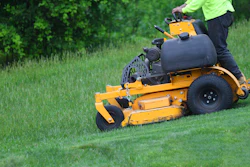
Before operating in any area, walk the project perimeter and become familiar with it. Identify debris, obstacles, soft spots, and slopes that could compromise traction or stability. Slopes present particular hazards. Reduce speed for all turns, operate with caution on slopes, and avoid highways. When using powered implements, the PTO (Power Take-Off) shaft rotates with tremendous speed and force. If you need to walk around the tractor or PTO‑driven implements, do so cautiously and stay aware of your surroundings. Never try to move over, through, or between the two, especially if either is running.
Ensure the PTO is properly covered and in good condition and keep implements low and always on the drawbar.
 Kubota Tractor Corp.
Step 4: Always Operate with Discipline
Never start an engine in an enclosed space. Exhaust contains carbon monoxide, which is colorless and odorless, making it a silent killer.
- Never refuel a running or hot engine, nor add coolant to a hot radiator; hot coolant can erupt and cause severe burns.
- Never leave a running tractor unattended.
- Never dismount while it's moving.
These aren't suggestions; they're safety absolutes.
Step 5: Build a Culture of Prevention
Approach each operation with deliberate focus: think safety first, then execute methodically. This mindset prevents the vast majority of preventable accidents.
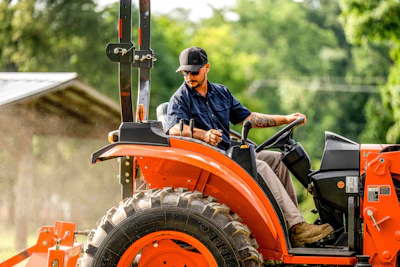
Rollover protective structures (ROPS) and seatbelts are critical to safe tractor operation. If your tractor has a foldable ROPS, fold it down only when absolutely necessary, then fold it up and lock it again as soon as possible.
- Never wear a seatbelt when the ROPS is folded down.
- Keep all children away from the tractor and its implements at all times; they are not toys.
- Never be in a hurry. Reject the culture of rushing. Rushing is a safety threat. Maintain composure and control of your machine at all times.
- Use three points of contact when entering and exiting the machine.
- Always put implements on the ground when you are done using your machine.
Compact tractors are remarkably versatile machines that empower property owners to accomplish great work. By selecting appropriate equipment and maintaining it properly, you are investing in the ultimate tool to help you work your land.
Through understanding your terrain, using protective devices, and exercising disciplined operational habits, you are creating a safe environment to use your equipment effectively. Tractors are efficient, powerful tools that help accomplish tasks and projects while keeping safety at the top priority.