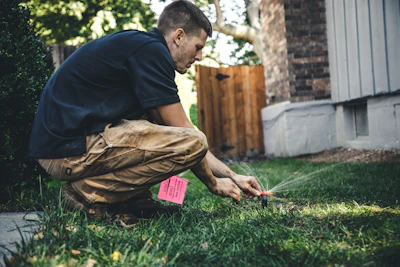
Every July the green industry comes together to recognize Smart Irrigation Month. Established by the Irrigation Association in 2005, the annual event is a timely reminder about the role contractors play in not only implementing responsible water management practices but also educating customers.
Between rising utility costs and local watering restrictions, customers are becoming more aware of how much water they’re using. But contractors can help turn that awareness into action. Smart irrigation is about more than fixing a broken sprinkler head. Contractors who can evaluate the system, identify inefficiencies, explain solutions and recommend the right tools can position themselves — and their business — as a resource for customers.
Become a Water Management Advisor
Inefficient water use may not be obvious to every customer. A dry patch can look like a sign to water more. Or a higher water bill may seem like the normal cost of a healthy landscape.
In most cases, the problem is not how much water is available, but how effectively the system is using it. According to EPA WaterSense, residential outdoor water use across the U.S. accounts for nearly 8 billion gallons of water each day, mainly for landscape irrigation. EPA also estimates that as much as 50 percent of that water can be wasted because of evaporation, wind or runoff caused by inefficient irrigation methods and systems. A household with an automatic landscape irrigation system that is improperly maintained and operated can waste up to 25,000 gallons of water annually.
By helping customers connect what they’re seeing to the cause of the problem, contractors can turn customer frustration into peace of mind.
Higher bills, saturated areas and brown patches often point to larger issues, like inefficient schedules, poor coverage or leaks. This is where contractors can step in as water management advisors for their customers.
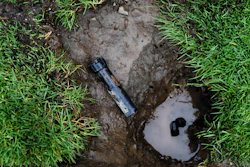
By helping customers connect what they’re seeing to the cause of the problem, (and ultimately a solution) contractors can turn customer frustration into peace of mind. Taking photos of broken heads, overspray, runoff or drainage issues, can help customers see the problem.
It’s also important to frame the conversation around each customer’s specific concerns, whether its costs, sustainability or plant health. By being a partner and advisor to their customers, contractors can build trust that earns business.
 SiteOne Landscape Supply
Implementing Smart Irrigation Best Practices
An irrigation audit is the primary tool contractors can use to evaluate system performance and efficiency, as it investigates both management practices and components.
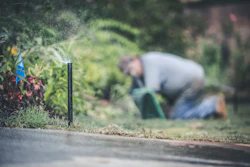
Starting with the system, look for leaks, broken or clogged heads, runoff, overspray, uneven coverage, poor head spacing, mismatched nozzles, pressure and flow conditions, and overall zone design.
Water management is not a one-time fix; it’s an ongoing strategy.
From a usage standpoint, contractors should evaluate schedules. If the system has a fixed schedule, it likely isn’t accounting for changes in rainfall, temperature, seasonality or other factors. That can mean a customer may be overwater during cool or wet periods and underwater during hot, dry stretches.
Contractors can use the data from the audit to identify problems and recommend solutions. While some fixes may be to replace any broken or mismatched components, some problems may be solved by incorporating smart irrigation technologies.
- Smart controllers can help take the guesswork out of irrigation by automatically adjusting schedules based on weather changes, plant needs or other site inputs. Many can be managed by phone, giving customers more convenience and flexibility.
- Soil moisture sensors show what is happening in the root zone. These sensors and moisture meters provide important data to strengthen recommendations beyond just looking at how wet a zone may appear.
- Flow monitors can identify unusually high or low water use that may be from leaks, broken components or other problems that might otherwise go unnoticed.
- Pressure regulators help systems operate within the recommended pressure range. These components typically reduce water pressure to 30psi which can result in as much as a 30% water savings.
- Check valves are useful on sloped sites, as they prevent water drainage from lower elevation sprinklers after a station operates. This reduces water waste and saturated soil conditions that affect plant health.
- WaterSense is an EPA program designed to identify products that are back by independent, third-party certifications and meet specifications for water efficiency and performance. WaterSense-labeled products add credibility and compliance to irrigation system upgrades.
With upgrades in place, contractors should set up a regular maintenance and inspection schedule with their customers to make seasonal adjustments, check the equipment and ensure everything is in working order. Water management is not a one-time fix; it’s an ongoing strategy.
 SiteOne Landscape Supply
Grow Your Business
While Smart Irrigation Month is an opportunity to talk about water efficiency, water management should be part of every contractor’s year-round business strategy. Contractors who understand smart irrigation best practices can build a customer’s trust by protecting their landscapes, reducing water waste, managing costs and improving system performance over time.
That kind of expertise helps contractors differentiate their businesses and opens the door to audits, upgrades, maintenance agreements and long-term customer relationships. By implementing these best practices, contractors can create healthier landscapes and a healthier business.