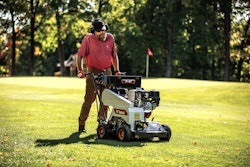
Soil is composed of 50% solid matter and 50% pore space, and these pores can change due to foot traffic, heavy machinery, or rainfall. When aerating soil, it is important to focus on hollow tine aeration over spiking because hollow tine removes plugs of soil to create voids, where spiking pushes the soil aside. Aeration should align with the grass's peak growth period. For cool-season grasses, the ideal aeration window is late summer to early fall, and for warm-season grasses, the ideal aeration window is late spring or early summer.
Bradley Mowers' resource, "Advanced Aeration and Overseeding: The Professional's Approach to Soil Health" provides information on the mechanics of soil compaction, strategic timing, overseeding protocol, post-aeration care, and how to measure success.
"A professional-grade aeration and overseeding project doesn't just look better for a month; it changes the trajectory of the lawn for years," according to Bradley Mowers.
Aeration enhances drought resistance and increases nutrient uptake in the soil. After aeration, many professionals advise leaving the hollow tine plugs on the lawn, as they will add microbes and organic nutrients to the topsoil. Irrigation should be done 2-3 times per day, and the amount should be just enough to keep the seeds damp, not soaked.
During post-aeration, a starter fertilizer high in phosphorus should be used instead of weed and feed products.