You know the feeling of stepping out of a car after a long road trip? Stiff joints, sore back, creaky neck — a sprint down the block probably isn’t in the cards. That’s because your body has been idle for a long period, allowing your muscles to contract, limiting your joint motion and decreasing blood flow. A short stretch can go a long way in helping your body get back to baseline.
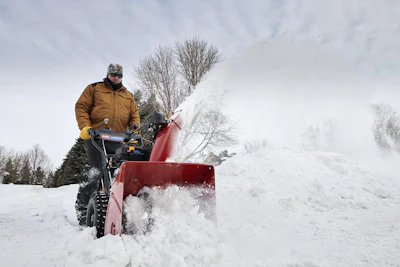
Now, I’m no physiologist, but I do know a thing or two about snow blowers, and pulling a snow blower straight out of storage isn’t all that different. The components and mechanisms that have sat idle for six months need a quick tune-up before tackling a foot of snow.
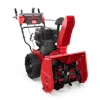
 The Toro Company
 The Toro Company
Check the Ground-Contact Components
On two-stage snow blowers, pay close attention to the skid shoes that help maintain clearance between the auger and the surface. It’s a safe bet that you’re working on concrete or asphalt most of the time, so adjust the skid shoes on a flat surface and maintain about 1/8 in. of clearance between the scraper blade and the ground. Many scrapers are also adjustable and may need to be adjusted prior to use.
If you’re clearing stamped concrete, pavers or another surface that’s especially susceptible to scratching, non-marking poly skid shoes can provide added protection. They typically wear faster than steel, so inspect them regularly throughout the season.
If you’re taking on a gravel job, you’ll need more clearance. Start with the skid shoes set higher and make small adjustments downward as needed to avoid pulling up and throwing loose rock or gravel.
Inspect Paddles & Scraper Bars
 The Toro Company
Inspect the scraper bar for even wear and check the paddles before first use. If the paddles have worn down to the wear indicator hole, replace them to help maintain proper performance and protect the machine.
Give the Rest of the Machine a Once-over
Once those commonly overlooked components are covered, finish with a broader pre-season inspection.
- Check belts for cracking, fraying, or stretching
- Look for loose or missing fasteners.
- Inspect and adjust cables to factory spec
- Inspect the machine for rust or chipped paint.
- On two-stage models, grease the wheel shafts as recommended.
- Always (always!) refer to your operator's manual for model-specific maintenance requirements, adjustment procedures, and replacement intervals.
A little preseason maintenance can make a big difference once the snow starts falling. By checking both the usual engine items and the components that take the most direct abuse, you’ll be better prepared for the first storm — and the rest of winter.