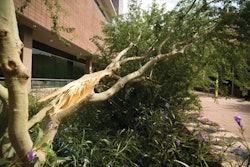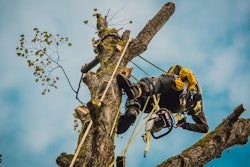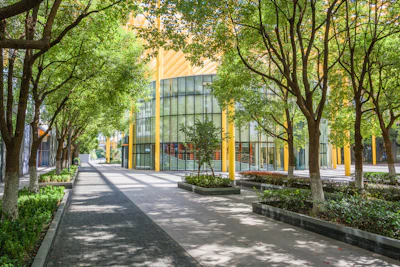
Commercial landscapes have a tree diversity challenge. Walk through many office parks, shopping centers, corporate campuses, and public spaces, and you’ll notice the same pattern. The trees are often the same species, planted at the same time, and expected to perform the same job. At installation, uniformity looks impressive. Everything is consistent, predictable, and visually clean. The challenge is that uniformity also creates vulnerability.
When a landscape relies too heavily on a single tree species, it only takes one pest, disease, or environmental stressor to create widespread damage. Instead of losing a few trees, a commercial landscape can lose a significant portion of its canopy in just a few years. As these landscapes face increasing environmental pressures, tree diversity is becoming less of a design preference and more of a long-term management strategy.
When One Pest Becomes Everything’s Problem
The landscaping industry has seen firsthand what happens when too much trust is placed in a single species.
Dutch elm disease dramatically changed urban forests across North America. More recently, emerald ash borer has eliminated millions of ash trees throughout the United States.
When a property contains large numbers of the same species, a single threat can quickly become a property-wide problem.
The issue is not that these trees were poor choices when they were planted. In many cases, they were selected because they performed well, were readily available, and met the needs of the project.
The problem was over-reliance.
When a property contains large numbers of the same species, a single threat can quickly become a property-wide problem. Removal costs, replacement expenses, and years of lost canopy can create financial impacts that extend far beyond the initial loss.
What may have started as a design decision ultimately becomes a maintenance challenge.
Diversity is Risk Management
Tree diversity is often discussed in environmental terms, but it should also be viewed through a business lens.
A diverse landscape minimizes risk. When multiple species are incorporated throughout a property, the impact of a pest outbreak, disease issue, or environmental stressor becomes more manageable. One species may struggle while others continue to perform.
Diversity functions as a form of insurance.
This creates stability not only for the landscape but also for the property owners responsible for maintaining it. A diverse canopy helps protect long-term investments and reduces the likelihood of large-scale replacements that can disrupt budgets and operations.
In many ways, diversity functions as a form of insurance. No one can predict every future challenge, but professionals can design landscapes that are better prepared to withstand them.
Planning for the Climate of Tomorrow
Commercial landscapes are often expected to perform for decades. That means tree selection decisions made today must account for conditions that may look very different twenty or thirty years from now.
Many regions are already experiencing longer periods of heat, more intense rainfall events, and extended drought conditions. These changing conditions place additional stress on landscapes that were designed around a narrower range of environmental expectations.
The goal is to avoid creating a landscape that depends on a single outcome.
Tree diversity helps address this uncertainty.
Different species respond differently to environmental stress. Some tolerate drought exceptionally well. Others perform better in wetter conditions or adapt more effectively to temperature fluctuations.
By incorporating a wider variety of trees into a landscape, professionals improve the likelihood that portions of the canopy will continue to thrive regardless of how conditions evolve.
The goal is not to predict the future perfectly. The goal is to avoid creating a landscape that depends on a single outcome.
Trees do More Than Provide Shade
Trees are often appreciated for their appearance, but their value extends well beyond aesthetics. In commercial environments, trees help reduce heat islands, improve air quality, manage stormwater, and create more comfortable outdoor spaces for employees, customers, and visitors.
A diverse tree canopy strengthens many of these benefits.
Different species contribute different ecological functions. Some provide food and habitat for wildlife. Others support pollinators. Some offer exceptional seasonal interest, while others provide long-term structural value to the landscape. Together, they create landscapes that work harder and deliver value in more ways.
As sustainability continues to become a priority for property owners and communities, these benefits will only become more important.
Looking Beyond Installation Day
One of the biggest challenges in commercial landscaping is balancing immediate expectations with long-term performance. Newly installed landscapes are often evaluated based on how they look on day one. Uniformity can create an immediate visual impact, which is one reason similar species are frequently used throughout a project.
The reality is that installation is only the beginning of a landscape's lifecycle. What matters is how that landscape performs in year five, year ten, and beyond.
Tree diversity supports long-term performance by creating resilience, reducing risk, and improving adaptability over time. The most successful commercial landscapes are not necessarily the ones that look perfect at installation. They are the ones that continue performing decades later.
The Future of Commercial Landscaping
The landscaping industry is not being asked to plant more trees. It is being asked to plant smarter trees. That starts with moving beyond short-term design trends and considering how landscapes will perform over their entire lifespan.
As environmental pressures continue to grow, diversity will play a larger role in how commercial landscapes are designed, managed, and evaluated.
Tree diversity is not a complicated concept, but it does require intentional planning. It requires professionals to think beyond what is available today and consider what a property may need tomorrow.
For contractors, landscape managers, and property owners, the benefits are clear: reduced risk, stronger landscape performance, and greater long-term value. The work will not change overnight, but the direction is becoming increasingly clear.
As environmental pressures continue to grow, diversity will play a larger role in how commercial landscapes are designed, managed, and evaluated. The question is no longer whether tree diversity matters. The question is whether today's landscapes are being designed with enough diversity to meet tomorrow's challenges.