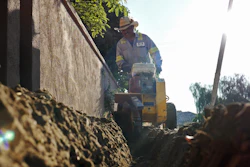
A lawn care owner in Atlanta showed me his dispatch board in March 2026. Eleven crews, fourteen open positions, and a phone that would not stop ringing. He told me he needed three more trucks on the road by April or he was going to lose his commercial contracts. When I pulled up the GPS logs from the prior week, his crews were averaging 71 minutes of unbilled drive time and rework per day. That is a full crew, hiding inside the schedule he already had.
NALP data puts the U.S. landscape services market at $188.8 billion in 2025 with over a million workers, and most owners I talk to are convinced the constraint is bodies. The dispatch boards say otherwise.
92% of landscaping companies [are] struggling to find qualified applicants.
Nobody needs convincing that hiring is hard. Pre-pandemic NALP surveys already showed 92 percent of landscaping companies struggling to find qualified applicants, and the pressure has only built since. RealGreen's 2024 reporting found that 76 percent of landscaping companies have at least one open position, and 25 percent report retention rates of 69 percent or lower. Wages have climbed accordingly, with NIP Group documenting average labor costs jumping from $15 to $18 per hour to $20 to $25 or more, and recommending operators budget 5-8 percent annual increases.
Layer on the regulatory side. The federal H-2B cap sits at 66,000 workers per fiscal year, and Mordor Intelligence flatly states that seasonal demand in landscaping exceeds the annual H-2B cap, leaving firms unable to staff peak months. Green Industry Pros has flagged H-2B updates and the Farm Bill as policy variables that will keep moving for the next several cycles.
Yes, the labor pool is tight. But when I look at what is actually happening on the boards of operators I work with every week, I keep seeing the same pattern: the crews they already have are losing 60 to 90 minutes a day to drive time and rework. That is the part of the crisis no recruiter can fix.
 Field Promax
What the Dispatch Boards are Showing
Here is what I mean by that 60-to-90 minute number. When we audit GPS logs and job histories on the platform I help run, the losses cluster into four predictable buckets:
- Sequencing drag. Stops scheduled in geographic order on a spreadsheet, but assigned to crews based on who picked up the phone first. Average penalty: 18 to 35 minutes per crew per day.
- Unannounced reroutes. A commercial account calls in a same-day, the dispatcher pulls a crew off a residential block, the crew finishes the emergency, then drives back across town to resume. Average penalty: 20 to 40 minutes.
- Rework from incomplete job data. Crew shows up without the right blade, the right chemical, or the gate code. Someone drives back. Average penalty: 15 to 25 minutes per occurrence, and these occur 2 to 4 times a week per crew.
- End-of-day reconciliation. Crews returning to yard to drop off paper tickets, hand-write notes, or get the next day's route. Average penalty: 10 to 20 minutes.
Add those up across a five-crew shop and you are looking at five to seven hours of recoverable labor every single day. That is most of a sixth crew you do not have to hire.
The market research backs the framing. Green Industry data, reported by Green Industry Pros, showed contractor lead times grew by four days in Q2 2021 versus Q2 2020 as job requests outstripped field capacity. NIP Group reports owners frequently calling clients to delay or reschedule because crews are not available. The crews exist. The hours just are not going to billable work.
Why Route Density is the Leverage Point, not Headcount
The typical contractor on our platform runs recurring weekly or biweekly routes for the bulk of revenue, and route-density gains in the 15 to 30 percent range are common in the first full season after switching from paper schedules to map-based dispatch. That is not a marketing claim. That is a number we see repeatedly in operator audits, and it is the most underused lever in the industry right now.
Think about what 20 percent route density means in practice. If a crew is currently completing 14 stops a day, density gains push that to 16 or 17 without adding a single hour of labor. Multiply by 26 weeks of peak season. Multiply by however many crews you run. That is the math nobody runs because the dispatch board is still a whiteboard.
 Field Promax
RealGreen has noted the same trend from the outside: landscaping businesses are increasingly using software for route optimization and mobile field management to "handle more customers with existing staff." Green Industry Pros' 2024 Road Map called out software and data-driven planning as critical for dealing with labor shortages, recommending proactive scheduling and route optimization as priority investments.
A fence contractor I work with in Phoenix put it bluntly: he had been quoting jobs four weeks out for two seasons running. He hired two people in 2024, and his backlog did not shrink. He restructured his dispatch process in early 2025, tightened his route sequences, and got his backlog to 11 days. He kept the new hires. They just stopped being a band-aid.
Team Management: Where Peak Season Gets Won or Lost
Density is one half of the equation. Crew composition is the other. Across our customer base, landscape and lawn care companies running larger crews report that team management features, specifically assigning leads and tracking crew composition by job, pay back fastest during peak season when one missed crew assignment can cascade across an entire route.
The operators who have figured this out treat the dispatch board as a planning instrument, not a calendar.
This is the part of the labor conversation I think gets ignored. When you lose 90 minutes on a Tuesday because your senior tech got assigned to a residential maintenance route while a junior crew got the commercial irrigation repair they were not certified to finish, that is not a hiring problem. That is a dispatch decision. The cascade hits Wednesday, then Thursday, and by Friday you are calling customers to push work into next week. NIP Group flags exactly this pattern: project delays and customer frustration from being short-staffed are now common, with owners frequently rescheduling because crews are mis-deployed, not because they are missing.
The operators who have figured this out treat the dispatch board as a planning instrument, not a calendar. They know which lead pairs with which apprentice. They know which truck has the stump grinder. They know which property requires a gate code call ahead. When the board carries that information, the 20-minute reworks disappear.
What to Actually do with This
If I were running a landscaping shop right now, this is the order I would attack the problem:
- Measure your real drive time. Not what your crews report, but what the GPS log says. Look at the gap between "left yard" and "first stop completed" for every truck for a full week. If it averages over 35 minutes, you have a route-density problem.
- Audit your rework events. Count the number of times a crew leaves a job site and comes back the same day or the next day. That is your data leakage from incomplete job briefs. Mobile-first job assignment with photos, notes, and customer signatures attached to the job record kills most of these.
- Map your assignments to crew skills. Build a simple matrix of which crew members can do what. Stop assigning crews based on who is free and start assigning based on who is right.
- Stop running scheduling from a spreadsheet. Most operators report that the moment they stop running scheduling out of a shared spreadsheet or whiteboard is the moment owner workload finally starts to drop. Across verticals, that transition typically pays back the platform cost within the first 60 to 90 days through recovered owner hours alone. The owner hours matter as much as the crew hours, because the owner is usually the bottleneck on every quote, every escalation, and every callback.
- Treat retention as a dispatch problem too. NIP Group recommends formal mentoring in the first 90 days and clear career ladders as retention tactics. The crew that knows what they are doing tomorrow morning, with the right truck, the right partner, and the right route, is the crew that stays.
Aspire's analysis of landscaping business failures lists "lack of systems for tracking key metrics and planning routes" as a direct contributor. The shops that scale through tight labor markets are the ones that build process discipline before they need it.
Reframe
The labor crisis is real. It is also…a dispatch crisis wearing a labor crisis costume.
I am not saying the labor shortage does not exist. BLS data still shows roughly 1.3 million workers in landscaping and groundskeeping roles, with employers reporting persistent hiring difficulty, and the structural pressures from wages, visa caps, and seasonal demand are not going away. What I am saying is that the operators I watch closest are not winning by out-hiring their competitors. They are winning by getting two more billable hours per crew per day out of the people they already employ.
If your board is still a whiteboard and your trucks are still driving back to the yard to swap equipment, you are leaving a hire's worth of capacity on the table every week. Fix that first. Then figure out how many people you actually need to add.
The labor crisis is real. It is also, for most shops I work with, a dispatch crisis wearing a labor crisis costume. Look at your GPS logs for one week before you post the next job opening. The hours you are looking for are probably already on payroll.