Landscaping businesses today go far beyond basic mowing and plant maintenance, taking on everything from hardscaping and tree work to irrigation and seasonal snow management. As project scope expands, contractors are increasingly adding compact construction equipment to their fleets.
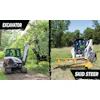
Thanks to their compact size and versatility, machines such as compact track loaders (CTLs), skid steer loaders (SSLs), and mini excavators help landscapers complete projects faster and more efficiently. Maximizing their value means understanding what each machine is designed to do and how to match the right equipment to the job.
No one machine can do everything. Each piece of equipment can play a different role depending on the task, terrain, and layout of the job site.
Compact Track Loaders
When working on uneven and muddy terrains, CTLs are often the preferred equipment choice. Their rubber tracks help provide better traction and lower ground pressure than wheeled machines, especially in soft, muddy, or uneven conditions. Tracks also help distribute weight more evenly, helping minimize damage to properties. With enhanced traction, CTLs can handle more demanding jobs and attachments.
Skid Steer Loaders
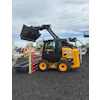
SSLs are better suited for solid and stable surfaces where efficiency, speed, and maneuverability are a priority. Their wheeled design allows for quick, responsive movement and tight turning capabilities, making them ideal for working in confined spaces or on projects that require precise positioning.
Both CTLs and SSLs are highly capable of handling a wide range of tasks including grading, site preparation, material handling, and other common landscaping applications.
Mini Excavators
Mini excavators are designed to maneuver in tight spaces while delivering the digging power needed for tasks, such as trenching, hole digging, irrigation installation, and drainage work. One of the key advantages of these machines is their ability to rotate 360 degrees without repositioning the machine. Their extended reach also enables them to place or lift materials over walls, fences, and other obstacles, making them a versatile solution for a variety of landscaping and construction applications.
 The KIOTI TL750KIOTI
Landscaping Applications
Site Preparation
Preparing the site is often the first step in a landscaping project. Knowing which compact construction equipment to use can help speed up this process. CTLs and SSLs are commonly used for leveling and grading ground, preparing areas for sod installation, installing patios and walkways, and planting beds. Equipped with the right attachments, they can also haul away debris and break apart concrete, asphalt, and other materials using hydraulic hammers.
On the other hand, mini excavators excel when projects require precision digging, trenching, or fine grading in tight or sensitive areas. With breaker and grapple attachments, they can also assist with light demolition tasks, such as removing small structures or landscape features.
Land Clearing & Tree Work
Preparing a property for a project also includes removing brush and other debris. CTLs and SSLs are effective for clearing brush, hauling debris, and handling cleanup work, particularly on rough terrain. Mini excavators can assist with removing stumps, roots, and other underground obstructions that would be difficult to address manually.
Material Handling
Moving materials manually can consume a significant portion of a crew's day. CTLs and SSLs allow operators to transport large volumes of soil, mulch, stone, and plant material quickly, reducing labor demands and keeping projects on schedule.
Mini excavators can also assist with material handling, especially when lifting and placing heavy materials in areas that are difficult to access. Their extended reach allows operators to place materials over fences, walls, and other obstacles. Additionally, all three machine types can help load materials into trucks or trailers for transportation.
Excavation & Trenching
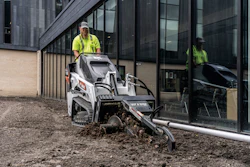
Many landscaping projects require excavation work for utilities, drainage systems, and structural features. Of course, mini excavators and compact loaders are the primary choice for trenching and digging tasks, including installing irrigation lines, creating trenches, transporting materials, backfilling trenches, and performing finish grading. Such attachments as trenchers, augers, buckets, and compactors can further expand their capabilities.
 The KIOTI SL750KIOTI
Hardscaping
Projects that include patios, walkways, and other hardscape features often require multiple types of equipment to be completed. Mini excavators are often used for digging and site preparation before construction begins. CTLs and SSLs well suited for transporting and positioning such materials as pavers, retaining wall blocks, gravel, and sand. Attachments — including augers, trenchers, and buckets — can further increase the versatility of your equipment throughout the project. For contractors who complete these types of projects, compact equipment can significantly reduce installation time, while improving material placement accuracy.
Snow & Seasonal Work
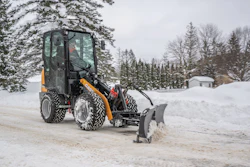
Many landscapers rely on their equipment year-round to maximize revenue. CTLs and SSLs can be equipped with snow blades, pushers, snow blowers, and salt spreaders to handle snow and ice management during the winter months. Their versatility allows contractors to smoothly transition from landscaping work in warmer seasons to snow removal operations when temperatures drop.
Operator Tips
Before using equipment on the job site, operators should spend some time becoming familiar with the ins and outs of their machines. Begin by reading your machine’s operator manual for safe operation and maintenance tasks. Every machine is different, and the operator manual will teach you what is unique about your equipment. You should also develop a relationship with the dealer where you bought your equipment. Your dealer will be the best source for attachment recommendations and help when more advanced issues arise.
Experienced operators understand that productivity isn't just about machine speed. Smooth operation helps minimize turf damage, reduce material waste, and improve finished quality, especially in residential properties where appearance matters.
Additionally, operators should maintain safe speeds and communicate clearly with crew members on the job site. Utilizing your equipment’s built-in safety features, like lights and rearview cameras, can further help avoid accidents. Beyond operating the machine safely, operators should always inspect job sites for potential obstacles. Familiarity with the work area can go a long way toward keeping everyone safe.
Maintenance
Jobsites expose equipment to dirt, moisture, and debris, making regular upkeep and preventive maintenance essential for minimizing downtime and maximizing performance. Operators should regularly inspect tracks or tires for wear, monitor fluid levels to help prevent overheating, and check for leaks or damage before minor issues become costly repairs. Keeping equipment clean between uses can also make it easier to identify problems early, helping ensure machines remain ready for the job.
As landscape businesses continue expanding into higher-value services, compact construction equipment has become a strategic investment, rather than a convenience.
Whether preparing sites, installing hardscapes, handling materials, or managing snow removal, the right machine can help contractors increase productivity, reduce labor demands, and take on more profitable work. By matching equipment to the application and maintaining it properly, landscape professionals can maximize uptime, improve jobsite efficiency, and position their businesses for long-term growth.