Summer has a way of making every jobsite feel like it is operating on fast-forward. Everyone is already stretched before the season hits full stride, and municipal teams are juggling mowing, tree work, storm cleanup and drainage on top of whatever lands in their inbox that week. Roadwork, sidewalk repairs, waterline upgrades, culvert replacements, streetscape improvements and park renovations all seem to hit at once during the warmer months. Summer gives municipalities longer daylight hours, more workable weather and a better window for asphalt, concrete, trenching, grading and restoration. But it is also when many funded projects are ready to move from planning to execution.
For landscape contractors and grounds crews, it means their sites are suddenly more complicated, without any change to what they are responsible for. A crew may not be replacing pipe, but it still has to maintain the property around that work.
Mowing schedules do not pause for construction. Planting beds, trees and parks still need attention, and commercial properties still need to make a good impression on customers and tenants. When a utility project leaves behind torn ground and moves on, someone still has to make the site look respectable again.
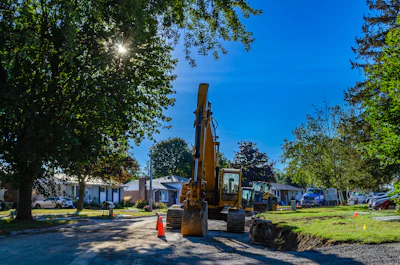
More often than not, that person is a landscape contractor. The challenge is that infrastructure work rarely happens in a clean, convenient corner of the property. It happens at entrances, along rights-of-way, beside sidewalks, near medians, through parks and across the exact turf landscape crews are trying to protect.
Suddenly, normal access points are blocked. Trucks cannot stage where they usually do, and pedestrians are redirected through maintenance areas. Even a simple mulch delivery can become a logistical problem. The summer infrastructure season deserves to be treated as more than a construction issue. For the green industry, it is an access issue, a restoration issue, a safety issue and a customer-expectation issue.
Turf Protection
The first pressure point is turf protection. Landscapers spend all season building, maintaining and repairing green space. Infrastructure work can undo that quickly if crews are not careful. Heavy equipment, repeated truck traffic, tight turns and poor staging can leave ruts, compacted soil, torn edges and damaged irrigation. On an active construction site, that may be considered part of the process. On a finished landscape, it looks like negligence. And it usually is not the landscape crew's fault.
For contractors working on public projects, the goal is not simply to get the task done. It is to get it done without creating more work behind them. That changes how crews think about equipment, timing and site movement. A machine that is too large for the space may save time on one task and cost time on five repairs. A route that looks fine on a plan may not work once traffic control, fencing, pedestrians and soft ground enter the picture.
Productivity
The green industry measures productivity differently than other sectors. Moving material fast is only part of the equation. The real measure is how much work gets done without damaging turf, interrupting the public or disrupting the polished appearance of a property.
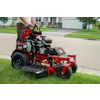
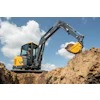
Construction season also demands versatility. Landscape and municipal crews are often asked to switch tasks quickly. One morning may involve moving soil or mulch. By lunch, the same crew may be cleaning storm debris, setting plant material, repairing turf or helping reopen a public space after construction activity. When infrastructure projects compress schedules, crews do not always get the luxury of sending a different machine for every job. That is why compact, multi-functional equipment has become more important in landscape and municipal work. One machine that can carry, lift, dig or sweep means fewer pieces moving through a tight site and fewer trips back to the shop when the day changes direction. In the middle of summer, when labor is tight and the margin for error is thin, that adds up.
Visibility
Green industry professionals work in places people are actively using every day, from parks and campuses to downtown corridors, sports fields and municipal facilities. When infrastructure work is happening nearby, the public usually does not lower its expectations for the green spaces around it. A torn-up road is understood. Neglected landscaping beside it is not. Residents and visitors may not know who is responsible for which part of the job, but they notice when a property looks like it has been abandoned. Green industry crews often become the public face of a site, regardless of who created the mess.
That visibility makes communication important. Landscape contractors should know what public work is scheduled near their sites and how it may affect access, irrigation, drainage, mowing routes or enhancement work. Municipal grounds teams should be part of the conversation before projects begin, not after the first machine rolls across a maintained lawn. Property managers should also understand how upcoming infrastructure work will affect landscape schedules and restoration needs.
A little coordination before the season starts can prevent a lot of problems once it does. By July, everyone is too busy to untangle issues that proper planning would have avoided. The smartest crews have already identified alternate access routes, staged materials away from traffic and protected sensitive areas before heavy equipment arrives. They work with the space that actually exists, not the space that was hoped for, and they build flexibility into the schedule because summer rarely cooperates with a perfect plan.
Weather
Weather adds another wrinkle. Warm months are ideal for many infrastructure projects, but they also bring heat, sudden storms and soil conditions that can shift without warning. Morning ground that feels firm can be soft by afternoon, and a restoration area that looked stable can wash out overnight. Crews that can read those conditions and adjust quickly have a real advantage
When Construction Moves On
All of that disruption also creates opportunity. When construction moves on, the restoration work that follows, including grading, seeding, planting and cleanup, typically falls to landscape contractors. Municipalities, general contractors and property managers need partners who understand how to work around active public spaces and leave the landscape better than they found it. That kind of work requires real judgment on a site, not just the ability to execute a task list. The contractors who stand out are the ones who can see the whole site, beyond their immediate scope. They understand that a park path is a public amenity and that a repaired utility trench is not finished until the ground above it is stable, safe and presentable.
Summer construction is not going away. Communities will continue investing in roads, water systems, parks, public facilities and streetscapes during the months when work can move fastest, and landscape contractors and grounds crews will keep operating alongside construction activity, traffic control and public expectations.
The green industry is used to working in the real world, with blocked entrances, soft turf, impatient drivers, surprise rain and a property owner who would still very much like the place to look nice by the weekend. Navigating all of that is what sets landscape professionals apart.
When infrastructure season shows up on the lawn, the crews that succeed are not just the ones that work harder. They are the ones that work smarter around the disruption, protect the ground beneath them and keep green spaces functioning while progress is under construction.