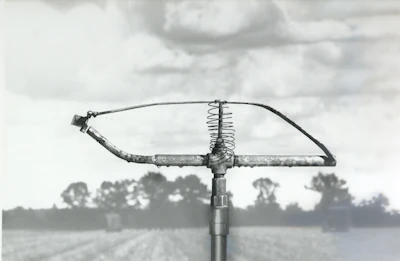
Designs don't last for decades by chance. The brass impact sprinkler endured because it was created with real-world conditions in mind. Early irrigation systems had to perform with inconsistent water pressure, varied water quality, and constant exposure to the elements. Failure was not an option, and maintenance resources were often limited or expensive.
The solution wasn't complexity; it was thoughtful engineering. Material selection mattered. Mechanical simplicity mattered. Every moving part had a purpose and nothing extraneous was added.
Longevity is Engineered, not Accidental
In an industry that prides itself on innovation, longevity is rare. New irrigation technologies promise progress, but don’t always withstand year after year. In irrigation history, one particular design has claimed its stake for over 90 years.
Originally invented in 1933 by Orton Englehart, a citrus farmer, the brass impact sprinkler was built to solve a straightforward but critical challenge: delivering consistent and reliable water distribution across large areas without any unnecessary complexities for the user. The design, officially patented in 1935, revolutionized the agricultural industry.
As it approaches its 91st anniversary, the design offers valuable lessons around what durability, reliability and long-term system performance should look like in modern landscape and field management.
Material science advancements have significantly expanded the options available for irrigation system design. Modern sprinklers and irrigation components now utilize improved materials that enhance durability and extend service life. These newer material selections also support better performance in diverse and evolving water conditions, particularly as the use of reclaimed water becomes more common. That approach created a design that could absorb wear, tolerate abuse and continue operating with minimal intervention.
While technology has advanced, the physical realities haven't changed. Irrigation systems operate in heat, cold, dust, debris and high-traffic environments. Designs that ignore those realities might perform well on paper, but they rarely perform over time.
Durability is a Performance Metric
When durability is treated as a core performance metric, efficiency becomes more sustainable, not just more measurable.
Efficiency in irrigation is often defined narrowly, focused on water savings, energy use, or system responsiveness. Those measures matter, but they don't tell the full story of how a system performs over time.
A durable system performs consistently year after year. It reduces downtime, minimizes service calls, and limits the need for premature replacement. For contractors, facility managers, and system owners, that consistency translates directly into long-term value.
When durability is overlooked, the consequences tend to surface later. This means that increased maintenance demands, higher labor costs, and unexpected failures can erode the gains promised at installation. Systems that look efficient on paper may struggle to deliver the same performance as conditions change and components age.
Long-standing irrigation designs offer a different perspective. They remind irrigation manufacturers and users that performance is not just about how a system operates on day one, but how reliably it operates over its entire lifespan. When durability is treated as a core performance metric, efficiency becomes more sustainable, not just more measurable.
Maintenance is Part of the Design
Systems are not static. They are adjusted, repaired, and adapted over time as landscapes evolve and usage changes.
Innovation is often measured by speed: how quickly new features are introduced and how frequently systems are updated. Longevity challenges that mindset by emphasizing what endures, not just what changes.
Designs that anticipate maintenance tend to age better. Components that are accessible, easy to understand, and serviceable in the field reduce the risk of small issues becoming larger failures. They also allow crews to work efficiently without specialized tools or extensive training.
In contrast, designs that prioritize novelty over serviceability often create long-term challenges. When maintenance becomes complicated or replacement is the only option, system performance suffers, and costs rise.
Longevity favors designs that respect the realities of field work and the people responsible for keeping systems operational.
What Can We Learn from This Legacy?
The lesson is not to return to older technology. Modern irrigation systems benefit from advances in controls, sensors, and data-driven decision-making. The opportunity lies in pairing those advancements with proven design principles.
When evaluating new irrigation solutions, green industry professionals can benefit from asking deeper questions:
- How will this system perform after years of exposure and use?
- How easily can it be maintained or repaired?
- What assumptions does the design make about real-world conditions?
These questions shift the focus from short-term gains to long-term outcomes.
Innovation is often measured by speed: how quickly new features are introduced and how frequently systems are updated. Longevity challenges that mindset by emphasizing what endures, not just what changes.
As the green industry navigates labor shortages, rising costs, and increased sustainability expectations, long-term system performance matters more than ever. Durable, reliable irrigation systems reduce waste, lower maintenance demands, and deliver consistent results over time. They support smarter resource use not just today, but well into the future.