Outdoor spaces are no longer "nice to have.” They have become an essential part of making a home feel complete. Today’s homeowners are intentionally seeking to make the most of these areas and create seamless transitions between indoor and outdoor living for maximum functionality. At the same time, expectations are higher than ever: quality, durability and long-term performance aren’t optional. Homeowners are investing with purpose and choosing partners, materials and designs that ensure the job is done right the first time.
As demand and expectations for outdoor spaces rise, so does the need for smarter, more flexible design approaches that perform well over time and adapt to ever-changing needs and environments. Outdoor spaces must now perform at a higher level, support changing lifestyles and functional purposes, and remain durable through environmental pressures.
This is where modular design, intentional pattern aesthetics and thoughtful material selection come into play. Working together, these elements create outdoor spaces that are more resilient, better attuned to their environments and better suited to their users’ needs.
Modularity in Design
Custom designs can transform outdoor spaces, but these complex installations often pose challenges for contractors to meet rising demand and deliver results that truly satisfy homeowners.
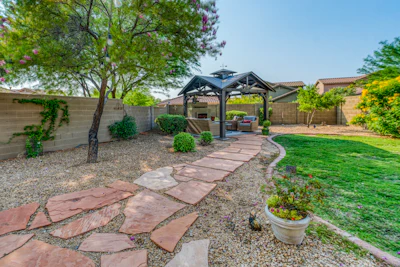
Designs can be anchored around functional outdoor features such as outdoor kitchens, fire pits, pergolas and more to create defined “zones” for outdoor activity.
Modular design has proven to be a key solution for meeting expectations and designing unique, elevated, and adaptable outdoor spaces. Unlike fixed layouts, modular systems allow pros to create spaces that anticipate changes and evolve with homeowners’ alternating wants and needs.
Modular design uses standardized sizing and interchangeable components to create custom, scalable layouts. These systems that work in consistent increments allow for designs to be adjusted, expanded, relocated, and refreshed over time.
For contractors, modular systems improve efficiency and simplify installation by minimizing cutting, waste, and rework on the jobsite. For homeowners, modularity offers the opportunity for change and reconfiguration as habits shift, families grow, trends evolve or needs unfold.
With modular design, the opportunities for outdoor living are endless. Designs can be anchored around functional outdoor features such as outdoor kitchens, fire pits, pergolas and more to create defined “zones” for outdoor activity. This encourages the use of the outdoors in the same manner as rooms would inside the home, resulting in maximum value and function delivered to the homeowner through modularity.
Pattern Play & Optimization
Patterns are often seen as purely aesthetic, but they work as a powerful tool in the function of outdoor design. Pattern organizes a space, directs flow and movement, and shapes how people experience a built environment.
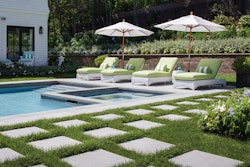
Combining texture and contrast to pavers and other outdoor features can create spaces that also serve as functional artwork.
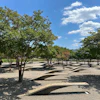
Adjusting scale, orientation, and repetition can signal transitions and define functional “zones” without the need for barriers or other indicators. Linear patterns can encourage movement and guide sightlines, while more complex patterns or visual mixing might invite people to slow down and linger.
Because modular elements are designed to align consistently, modularity in outdoor design has opened the door for experimentation with patterns, colors, textures, and materials. Combining texture and contrast to pavers and other outdoor features can create spaces that also serve as functional artwork. Vertical elements can further complement horizontal patterns and other design elements, reinforcing cohesion across the outdoor space.
Patterns are most effective when intentional and aligned with the space’s purpose, guiding intuitive movement throughout. Modular pavers make it easy for contractors and designers to experiment with geometric shapes, layers, textures, and colors to create custom, unique looks that combine visual interest with function.
Material Selection Matters
Material selection merges design creativity with demands of the environment. Outdoor spaces are expected to withstand weather, wear, and time while maintaining their visual integrity. Next-level outdoor spaces must prioritize materials that perform well throughout the condition and preserve their visual appearance.
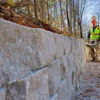
Coordinated systems, like interlocking pavers paired with modular wall elements and complementary edgers, caps or coping help create visual continuity while supporting structural longevity and ease during installation.
Durable hardscapes and materials enhance aesthetics without sacrificing longevity or quality. With modern innovation and high-quality products from industry leaders, the investment can last far longer and ensure the job is done right the first time. A wide range of hardscape textures, colors, and formats is available to suit any home’s aesthetic, creating bountiful opportunities for refined, modern and elevated outdoor results.
How materials interact and work together is equally important. Mixing material textures and compositions adds dimension and depth while supporting functional needs, such as drainage and temperature regulation. Coordinated systems, like interlocking pavers paired with modular wall elements and complementary edgers, caps or coping help create visual continuity while supporting structural longevity and ease during installation.
Sustainability is also increasingly important for homeowners. Long-lasting materials, low maintenance and effective water management are critical for creating environmentally responsible and resilient outdoor spaces. Permeable pavers help reduce long-term water use and enhance durability for outdoor spaces designed with longevity in mind.
Systems Over Snapshots
One of the defining characteristics of next-level outdoor spaces is the ability to adapt. Modular design makes change possible, intentional patterns provide clarity and thoughtfully selected materials reduce the need for inopportune, costly replacement.
These features create cohesive, adaptable systems rather than basic layouts that fail to properly address user expectations. They work in tandem to reduce long-term costs, improve usability and extend the functionality and freshness of a space well beyond its initial installation.
As indoor and outdoor spaces continue to blend and homeowners seek to maximize the value of their dollar, the future of outdoor design will favor spaces that are built to be updated, used to their full potential, and reimagined over time.