In today’s landscape management environment, efficiency, safety, and sustainability are no longer optional, they are essential. Labor shortages, rising equipment costs, and increasing expectations for property appearance are pushing landscape professionals to find smarter ways to maintain turf and ornamentals. One of the most effective, yet often underutilized, tools in modern landscape programs is the use of plant growth regulators (PGRs).
PGRs help manage plant growth by slowing vegetative expansion without compromising plant health or aesthetics. When applied correctly, PGRs reduce the need for frequent trimming, improve safety for employees, minimize plant stress, and lower overall maintenance costs.
Whether managing commercial properties, campuses, municipalities, golf courses, or residential landscapes, PGRs offer a strategic advantage that goes far beyond simple growth control.
Time and Labor Savings That Add Up
All turf growth regulators are PGRs, but not all PGRs are turf growth regulators.
At their core, PGRs are about efficiency and risk reduction.
One of the most compelling benefits of PGRs is their ability to reduce labor demands. Trimming is one of the most time-consuming tasks in landscape maintenance, often requiring multiple crew members and return visits throughout the growing season.
With many PGRs, landscape managers can achieve 8 to 16 weeks of growth regulation before another trim or application is needed. That translates into fewer site visits, shorter time on each property, and more predictable scheduling for crews.
Reduced trimming also means less debris to collect, haul, and dispose of. The time and money spent on disposal are often overlooked but can add up quickly over a season. By limiting excessive growth, PGRs help reduce the volume of green waste and associated disposal fees.
Traditional trimming programs rely heavily on labor, mechanical equipment, and repeated site visits. Each trim brings stress on the plants, added costs (such as fuel, blade wear, disposal fees, and labor hours), and potential safety risks for employees. By regulating growth instead of constantly cutting it back, PGRs help address several of these challenges simultaneously:
- Reduced Equipment Wear and Tear — Hedge trimmers, pole saws, and mowers experience significant wear over a season. Frequent trimming accelerates blade dulling, increases maintenance needs, and shortens equipment lifespan. Fewer trims mean less mechanical strain, lower repair costs, and reduced downtime for crews.
- Improved Employee Safety — Trimming shrubs and hedges often requires ladders, pole equipment, and awkward working positions. These tasks increase the risk of falls, cuts, and strains. By extending the time between trims, PGRs reduce the frequency of high-risk activities such as ladder work and extended use of powered trimming equipment.
- Reduced Off-Target Damage — Mechanical trimming can unintentionally damage nearby plants, irrigation heads, hardscapes, and structures. Trimmers can nick bark, tear foliage, and create entry points for pests and disease. Growth regulation minimizes these risks by reducing how often equipment is used near sensitive plant material.
- Protection of Infrastructure and Visibility — Overgrown plants can block security cameras, lighting, signage, and sightlines around buildings and roadways. PGRs help maintain consistent plant size and shape, keeping lights effective, cameras unobstructed, and properties looking professional without constant intervention.
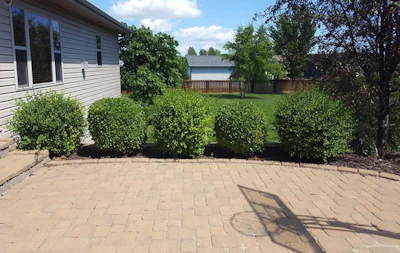
 The yellow arrows mark treated ornamentals with the Atrimmec plant growth regulator. PBI-Gordon Corporation
Understanding Plant Growth Regulators vs. Turf Growth Regulators
By regulating growth instead of constantly reacting to it, landscape managers can spend less time trimming and more time focusing on overall landscape quality.
All turf growth regulators are PGRs, but not all PGRs are turf growth regulators. This distinction is critical for landscape professionals managing mixed turf and ornamental plantings.
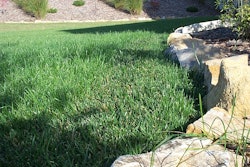
Some active ingredients, such as paclobutrazol, regulate growth in both turfgrass and ornamental plants, making them useful when broad growth suppression across multiple plant types is desired. Trinexapac-ethyl, on the other hand, is an excellent choice specifically for turf growth regulation, helping reduce mowing frequency while maintaining turf density, color, and overall playability or appearance.
Other active ingredients, such as dikegulac-sodium, are designed specifically for woody plants and ornamentals and are formulated to regulate the growth of shrubs, hedges, trees, and groundcovers (with no effect on surrounding turfgrass). This selectivity makes it an ideal option for landscapes where ornamentals are adjacent to lawns, parkways, or sports turf. Because ornamental PGRs do not affect turf, applicators have greater flexibility and confidence when treating near grassy areas. Any minor drift from a dikegulac application will not impact turf uniformity, color, or growth rate — an important consideration for properties where visual consistency is critical.
While PGRs are formulated to provide extended growth regulation, additional applications may be required at certain points during the growing season to maintain consistent, full-season performance.
Plant Health Benefits: Less Stress, Fewer Problems
Repeated trimming is not just labor-intensive; it can also be stressful for plants. Constant mechanical cutting forces plants to repeatedly redirect energy into new vegetative growth, often resulting in dense, tender regrowth that is more susceptible to pests and diseases.
By slowing growth naturally, PGRs reduce repetitive stress injury to plants. This leads to stronger, more balanced growth habits and can contribute to fewer insect and disease issues over time. Healthier plants also recover better from environmental stress such as heat, drought, or transplant shock.
PGRs are not a replacement for trimming. Rather, they are a smarter complement to it. When integrated into a comprehensive landscape management program, PGRs help professionals work more efficiently, protect their crews, improve plant health, and deliver consistently attractive landscapes.
As labor challenges continue and expectations for safety and sustainability increase, PGRs offer a proactive solution. By regulating growth instead of constantly reacting to it, landscape managers can spend less time trimming and more time focusing on overall landscape quality.
In modern landscape management, PGRs aren’t just a convenience, they’re a strategic advantage.