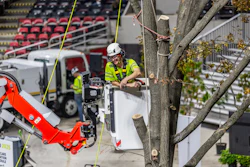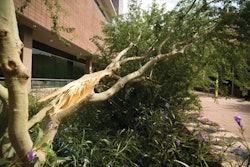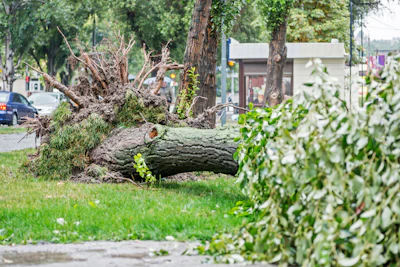
Hurricane season has a way of reminding every community that the level of preparation that takes place beforehand directly translates to how quickly, safely and efficiently crews can get to work after one.
Landscape contractors, municipal grounds teams, public works departments and property managers are well-versed in how chaotic that recovery period can be. Teams face everything from blocked roads, downed trees and flooded drainage areas to local properties with varied degrees of structural damage. Restoring access can be a complex, time-consuming process.
Debris Removal
In many declared disaster zones, debris removal is one of the first and most visible steps in recovery. It is also one of the most expensive. Debris removal often accounts for a significant share of disaster recovery costs. The green industry is often closer to that challenge than people realize. After a hurricane or severe storm, landscape contractors and grounds crews are frequently among the first teams asked to help make a property usable again.
Landscape teams may be responsible for clearing tree limbs from entrances, moving mulch or soil that has washed into walkways, reopening access to parking lots, repairing damaged turf, cleaning drainage paths or helping restore public green spaces. Their work is critical for restoring access for power crews, emergency responders and utility contractors working on disruptions to essential services and resources.
Even experienced operators need a clear understanding of what each machine can safely handle, where it should and should not be used and how communication will work when multiple crews are moving through the same property.
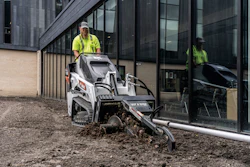
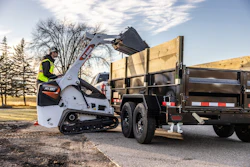
This is what makes equipment readiness so important. Too often, preparedness plans focus on materials, staffing and response procedures, but equipment planning gets treated as a static guarantee. The assumption is that if a machine is available, it will be ready. Hurricane season exposes the weakness in that thinking. A mini articulated loader, tractor, dump trailer, chainsaw, sweeper or grapple that has not been maintained, fueled, inspected or matched to the work ahead can slow down an entire recovery effort.
Ready the Crew
Operator readiness is a key part of effective preparation. Post-storm jobsites rarely look or operate like normal work environments. Crews may be working around standing water, hidden debris, unstable trees, damaged pavement, low-hanging utility lines or limited lighting. In those conditions, even experienced operators need a clear understanding of what each machine can safely handle, where it should and should not be used and how communication will work when multiple crews are moving through the same property. Reviewing attachment use, load limits, machine stability, visibility concerns and basic recovery procedures before the season can help reduce mistakes when pressure is high and conditions are changing quickly.
Crews should start simple, asking only what jobs they will realistically be asked to do in the first 24, 48 and 72 hours after a storm. Once that list is clear, the equipment plan becomes more practical, allowing decision makers to focus on what matters most, like having the right attachments, enough transport capacity, proper tire or track options, lighting, chains, fuel storage, spare parts and trained operators all in place ahead of time.
The Strategy of Documentation
Good planning also includes documentation. Contractors and municipal teams should keep maintenance records, equipment lists, operator assignments and pre-storm photos of sites where appropriate. In recovery work, especially when public funding, insurance claims or FEMA-related reimbursement may be involved, documentation can be just as important as the work itself. The ability to show what was done, when it was done, what equipment was used and why the work was necessary can help reduce confusion later.
Financing strategy should be part of the conversation, too. Many contractors and municipalities know they need additional equipment before storm season, but may wait until demand spikes or a storm is already on the radar. By then, availability may be limited, financing decisions may be rushed and the equipment that is easiest to get may not be the best fit for the work.
The communities and contractors that recover fastest are the ones that understand their sites, know their risks, maintain their machines, train their operators and make smart decisions before the first storm warning appears.
A smarter approach is to think about storm readiness as part of the annual equipment plan. That may mean purchasing a machine before the season, adding key attachments, arranging rental access, building relationships with dealers or financing equipment in a way that protects cash flow while improving response capacity. The right answer will not be the same for every contractor or municipality, but the timing matters. Recovery is easier when those decisions are made before the emergency actually happens.
Hurricane season will always bring uncertainty. No plan can predict the aftermath of a natural weather event, expected or unexpected. But crews can control how prepared they are to respond. The communities and contractors that recover fastest are the ones that understand their sites, know their risks, maintain their machines, train their operators and make smart decisions before the first storm warning appears. This approach makes all the difference between waiting and working, because after the storm passes, the real test begins.