Autonomous and remote-controlled mowing technology is helping contractors maintain highways more safely by reducing worker exposure to traffic hazards, steep terrain, and dangerous conditions. Rather than replacing workers, these advances allow experienced crews to supervise equipment and focus on more complex tasks while machines handle repetitive or high-risk mowing work.
- The Federal Highway Administration reported 850 work-zone fatalities in 2024, highlighting the dangers highway maintenance crews face daily
- Remote-controlled mowers let operators control equipment from safer vantage points, reducing exposure to steep slopes, uneven terrain, and passing traffic
- Autonomous mowers can complete repetitive mowing assignments with minimal hands-on involvement, freeing experienced workers for supervision and maintenance tasks
- According to NALP, 51% of landscaping business owners cite staffing as their top challenge, making technology a workforce multiplier rather than a replacement tool
- Technology doesn't replace safety procedures—it supplements them by reducing unnecessary worker exposure to high-risk conditions
There's nothing quite like mowing alongside a highway to keep you on your toes.
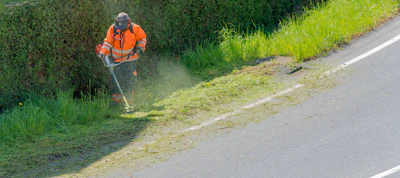
Cars and trucks are flying by, the ground is uneven, and there's always the possibility of a hidden obstacle waiting to ruin someone's day. Add steep slopes, narrow shoulders, and distracted drivers, and roadside mowing isn't your average landscaping job.
For years, crews have handled this demanding work from the seat of a mower, often just feet from moving traffic. But what if they could get the job done without putting an operator directly in harm's way?
Advances in autonomous mowing technology are giving contractors new ways to do just that.
As equipment improves, contractors and transportation departments have new opportunities to maintain roadsides while protecting employees and making better use of their crews.
And here's the best part: These advances aren't about replacing workers. They're about creating safer working conditions and allowing crews to focus on other important tasks.
The Highway Is No Place for a Close Call
Let's face it. Mowing a highway median or an offramp gore is a different ballgame than maintaining the lawn outside an office building.
According to the Federal Highway Administration, 850 people lost their lives in highway work-zone crashes nationwide in 2024. While most victims were the motorists, the fatalities underscore the dangers facing crews responsible for maintaining America's roads.
Traffic moves fast, visibility isn't always the best, and there's not much room for error.
Medians are especially tough. Crews often find themselves working between lanes of traffic, with cars and trucks speeding by on both sides and barely enough room to maneuver. Traffic control measures can help keep workers safe, but there's only so much they can do when a distracted driver shows up.
And traffic isn't the only concern.
Steep slopes, roadside ditches, and overpasses can turn a routine mowing job into a real challenge. Add wet grass, loose soil, and drainage features hidden beneath the vegetation, and operators have their hands full before they even factor in the passing vehicles.
For contractors, these challenges go beyond getting the grass cut on schedule. They're about protecting the people doing the job.
And sometimes, the safest place for an operator is somewhere other than the mower seat.
Let the Machines Tackle the Tough Stuff
But when crews spend hours mowing the same stretches of highway, tackling tough terrain, or working dangerously close to traffic, there may be a better way to get the job done.
Think about a long stretch of highway with relatively even ground and clearly marked mowing areas. Instead of having someone ride back and forth for hours, autonomous mowers can take on much of that repetitive work where conditions allow.
Steep slopes are another story. That's where remote-controlled mowers can make a big difference. Rather than putting an operator on a machine that could tip or slide, these mowers let workers control the equipment from a safer spot.
And while the two technologies share a common goal of making mowing safer, they work differently. Autonomous mowers can complete assigned jobs with little hands-on involvement, while remote-controlled machines still require someone at the controls.
But you don’t need to automate everything just because the technology exists. You still need to identify the jobs that put workers at the greatest risk and find smarter ways to handle them.
After all, there's no prize for putting someone in a dangerous spot when a machine could do the work instead.
A Safer Distance Changes Everything
Picture a crew arriving at a highway maintenance site.
Normally, someone might spend hours operating a mower near passing traffic, navigating uneven terrain, and watching for dangerous drivers.
Now imagine that crew using remote-controlled equipment for suitable portions of the job. Workers still assess the site, establish the work area, inspect equipment, and monitor operations. Trained personnel remain available to respond when conditions change.
Remote-controlled mowing helps reduce exposure to hazardous terrain. Steep embankments, uneven ground, drainage ditches, and slippery slopes can put operators at risk. By allowing workers to operate equipment from a safer vantage point, these mowers can tackle difficult areas without requiring someone to ride directly into dangerous conditions.
The grass still gets cut. The work still gets done. But instead of spending hours in the mower seat, an employee may be able to oversee operations from a safer designated location.
That's a significant change.
Of course, remote-controlled equipment isn't a magic safety net. Highway maintenance still requires careful planning, traffic control, equipment inspections, and established safety procedures. Technology doesn't replace good judgment. It gives crews another way to reduce unnecessary exposure.
The Future Still Needs Skilled People
Mention autonomous equipment to contractors, and somebody will eventually ask the obvious question: What happens to the people who used to operate those mowers?
It's a fair question, but it overlooks a significant industry reality: The green industry isn't exactly overflowing with available workers. Recruiting dependable employees and retaining experienced crews remain among the biggest obstacles facing landscaping contractors.
In fact, according to a National Association of Landscape Professionals (NALP) survey, 51 percent of landscaping business owners identified staffing as their top business challenge.
Autonomous equipment can help contractors make better use of their existing workforce.
Instead of spending an entire day making repetitive mowing passes, experienced employees can supervise equipment, inspect work areas, maintain machinery, or handle more complicated assignments.
There are still plenty of jobs requiring human judgment, from managing challenging terrain to performing detailed tasks. As technology becomes more common, employees can also develop new technical skills.
Machines may be getting smarter, but they still need smart people operating them.
The Road Ahead: Smarter Mowing, Safer Crews
Highways aren't going anywhere. Neither are the medians, ditches, and embankments requiring regular maintenance. And unfortunately, grass has never cared much about anyone's schedule.
The work will always need to get done.
But just because we've spent decades doing it one way doesn't mean we have to keep doing it that way.
Autonomous and remote-controlled mowing offers contractors a chance to work smarter, make difficult jobs safer and supplement their crews.
And the most impressive thing about a mower that can operate on its own isn't necessarily what it can do. It's what the person who used to sit on it no longer has to do.