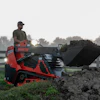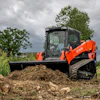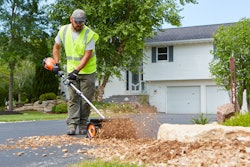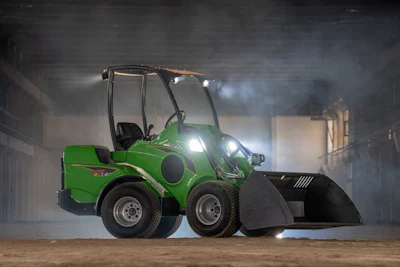
As the electric compact equipment trend continues to grow, there's an important question to ask: How long can these machines run on a single charge? It’s a top priority when looking for cost-effective equipment that also runs efficiently.
With electric loaders and attachments becoming more popular, understanding the factors that influence runtime is key for anyone relying on this innovative technology. From battery capacity to environmental conditions, there are several variables at play.
Understanding the Factors Affecting Run-Time
Electric compact equipment, like loaders and attachments, offers advantages including quieter operation, reduced emissions and lower maintenance costs. Run-time, however, remains an important consideration. One of the primary elements is battery capacity. Much like how the size of a gas tank determines how far a car can travel, the capacity of an electric battery largely determines how long the machine can work.
The type of tasks performed impacts energy consumption. Power-intensive tasks, like lifting heavy loads or working on rough terrain, drain the battery faster than lighter tasks like turf maintenance or soil cultivation.
The more challenging the operating conditions, the more energy the machine consumes.
Attachments can either increase or decrease the load on the machine, directly affecting its battery usage. A machine equipped with a tool that demands more hydraulic flow, such as a flail mower or trencher, requires more energy to operate than one using a simple bucket or pallet forks. Tools with high hydraulic demand can cause the machine to draw more power, reducing overall run time.
Beyond the tools, the application also matters. Equipment used for landscaping in a park with flat, paved surfaces will typically see longer battery life than when operating on a construction site with rough terrain and frequent heavy lifting. Understanding these demands helps estimate run-time and plan the number of tasks a machine can handle before needing to be recharged.
The environment where the equipment is used also influences run-time. Extreme temperatures can have a substantial impact on battery performance. Cold weather, in particular, can reduce battery efficiency and cause a machine to run for a shorter period before requiring a recharge. Conversely, hot weather can cause batteries to overheat, potentially leading to reduced performance and needing more frequent breaks, replacements and recharges.
Experimental studies on commercial lithium-ion batteries show that performance is strongly dependent on ambient temperature. For example, capacity can decrease by about 15% at approximately −10° C (14° F) and by about 35 percent at −20° C (−4° F) compared with room-temperature operation, primarily because low temperatures increase internal resistance and slow ion mobility. Conversely, temperatures above the optimal range (~15–35° C / 59–95° F**) can accelerate internal aging and thermal degradation, reducing lifespan and efficiency over time.
Terrain also plays a major role. Working on soft, uneven ground will put more strain on the machine, draining the battery faster than when working on flat, smooth surfaces. Obstacles like curbs or rocks may add resistance that further impacts battery efficiency. Like any piece of equipment, the more challenging the operating conditions, the more energy the machine consumes.
How to Estimate Run-Time in Real-World Conditions
Manufacturers often provide run-time estimates under ideal conditions, but real-world scenarios rarely align perfectly with these controlled environments. Most OEMs now cite a run-time range of 4 to 8 hours per charge for compact electric equipment in average use, with a typical overnight recharge for a full work shift.
Tracking run-time during different tasks and conditions allows operators to develop a better understanding of how different jobs affect battery life. For instance, when a heavy-duty attachment is in use for tree care or construction, the machine runs for a shorter period than when performing lighter tasks like lawn mowing or snow removal. Keeping a log of run times with these findings can help plan the workday better and reduce the chances of running out of battery during a task.
Maximizing Battery Life and Run-Time
Getting the most out of electric compact equipment involves more than estimating run-time. Regular maintenance keeps machines in top condition and helps optimize battery usage. This includes routine checks on the battery, attachments and components, as well as cleaning battery terminals and inspecting for wear.
Monitoring the load on the machine is another strategy to extend battery life. Heavier loads require more power, so adjusting tasks to avoid overloading extends battery life. In addition, charging habits matter: studies show that keeping a lithium‑ion battery within a mid‑range state of charge (e.g., between 20 and 80 percent) can double its overall lifespan compared with regularly discharging it fully from 100 to 0 percent, as deeper discharges place more chemical stress on the battery cells.
As electric compact equipment becomes more widely used across the landscaping and lawn care industry, understanding how to manage run-time and battery life helps maximize productivity. By considering battery capacity, task type, attachments, environmental conditions and maintenance practices, operators can make informed decisions that ensure reliable, efficient and eco-friendly performance throughout the workday.