Landscape fabric performance depends on matching the right construction to the specific ground job: woven weed barriers for planted beds, dual-layer separation fabric for gravel and pavers, and non-woven geotextiles for drainage and wet ground applications.
- Three fabric types for three jobs: Woven weed barrier for beds and mulch, dual-layer separation fabric for gravel and pavers, and non-woven geotextile for drainage and filtration.
- Common mistakes include using bed fabric under gravel, using drainage fabric in planting beds, and over-specifying heavy weight where breathability is needed.
- Installation matters equally to selection: cover fabric same day, plan overlaps with water flow direction, and anchor appropriately for soil type.
- Key specifications to compare: ASTM D4491 for water permeability, ASTM D4632 for tensile strength, and ASTM D6241 for puncture resistance.
- Write ground job into specifications by describing what the fabric must accomplish rather than using vague terms like weed barrier.
Walk a finished landscape six months after installation, and you can often learn a lot from what is happening beneath the surface.
A planting bed may be holding too much moisture. Gravel may be starting to mix into the soil below. A French drain may not be filtering as effectively as intended. In many cases, the issue is not simply whether landscape fabric was used, but whether the right type of fabric was chosen for the job.
“Landscape fabric” is a broad category. Different constructions are designed to perform different functions, from weed control and soil separation to drainage and filtration. A useful way to choose is to start with a simple question: What does the fabric need to do in the ground? From there, the right construction becomes much easier to identify.
Three Ground Jobs, Three Constructions
1. Beds, Mulch and Planting Rows: Woven Weed Barrier
Where you plant through fabric and cover with mulch or soil, the priority is light control plus breathability. Woven polypropylene does that through small interwoven gaps. Water and air still reach the roots. Weeds are denied the light they need.
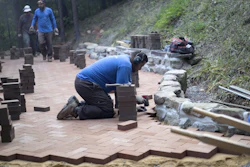
Look for medium weight in this lane (often around 3.2 oz class), clean-cut edges, and visible planting guides so crews can X-cut and align without constant measuring. The failure mode here is usually not "too light." It is over-specifying a heavy dual-layer that reduces permeability where plants need it, or leaving fabric uncovered so UV and wind undo the install.  Cutaway under pavers showing dual-layer fabric beneath crushed base. The job is load, separation, and stopping fines from pumping into the subgrade.DOTDAY
2. Gravel, Pavers and Traffic Areas: Separation and Strength
Under angular stone, driveway bases, and paver systems, fabric has a different job: carry load, stop pumping, and keep the surface from mixing into the subgrade. A single woven bed fabric will tear, bridge, and let fines migrate.
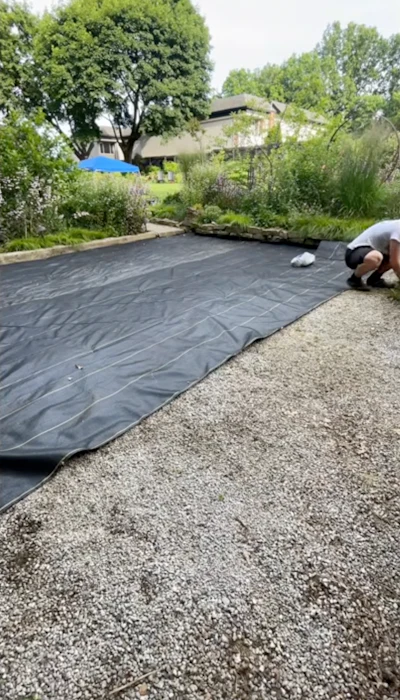
Dual-layer systems pair a woven face for tensile strength with a needle-punched or capped backing that blocks light and resists puncture. Specs that matter in this lane include CBR puncture, thickness, and water flow under load (ASTM D4491 and D6241 are useful references). Guidelines still help on long runs. Cover promptly with base or gravel so the fabric never sits as a UV sacrifice layer.  Non-woven geotextile covered with crushed base on a working install. Drape into the trench, overlap with the water path, and cover the same day.Jeff St. Pierre, St. Pierre Grounds Maintenance. Courtesy of DOTDAY
3. Drainage, Retaining Walls and Wet Ground: Non-Woven Geotextile
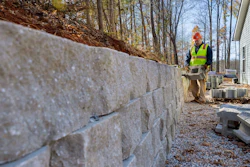
French drains, retaining-wall backfill, and soil separation need filtration and high through-flow. Non-woven needle-punched fabric moves water through the body of the fabric while holding silt out of the stone. That is a different tool than the weed barrier sold for beds.
Fabric weight can still matter, but it should be considered alongside filtration, permeability, and puncture requirements rather than being treated as a simple measure of quality.
Installation matters just as much as selection. In a drainage trench, the fabric should conform to the excavation rather than bridge or “tent” across it, and overlaps should be planned with the direction of water movement in mind.
Getting It Wrong
- Bed fabric under gravel. Saves a few dollars on day one. Creates pumping, tears, and a redo that costs more than the right roll.
- Drainage fabric used as a plant-through bed barrier. Wrong light control and cut behavior for nursery rows.
- "Heavier equals better" on every ticket. Weight without matching construction to the ground job is how soil health and drainage get sacrificed.
- Bad overlaps and anchoring. Too little overlap invites weeds and fines. Too much creates dams. Pins that are too sparse let fabric shift and fold.
 Water moving through a non-woven geotextile mat. Specified for through-flow and filtration in wet ground, not as a plant-through bed cover.DOTDAY
Best Practices Pros Can Hand to a Crew
- Name the ground job first. Beds / Mulch. Gravel / Pavers / Traffic. Drainage / Filtration. Only then pick construction and weight.
- If two jobs share a site, use two fabrics. A planting bed next to a paver walk is two specs. Do not compromise and use one roll.
- Plan water, then seams. Overlap with flow on slopes. Avoid creating pools at seams.
- Anchor for the soil. Sandy soils need closer pin spacing. Compacted soils can hold farther spacing. Edges and seams always get attention.
- Use guides and track SKUs. 12-in. planting lines cut layout time. Labeled rolls help warranty and callbacks years later.
- Cover the day you install. Mulch over bed fabric if needed. Base or gravel over separation fabric. Backfill over drainage fabric.
Standards Worth Knowing
Landscape professionals do not need to memorize laboratory test methods, but understanding a few common standards can make product specifications easier to compare.
- ASTM D4491 relates to water permeability and permittivity.
- ASTM D4632 measures grab tensile properties.
- ASTM D6241 evaluates puncture resistance and can be particularly relevant where fabric will sit beneath aggregate or experience demanding installation conditions.
Numbers belong next to the ground job. A high flow rate that wins in a drain trench is not the reason to pick that same construction for a rose bed.
 Non-woven geotextile fabric on a driveway / hardscape run with crushed base going down the same day. DOTDAY
Write the Ground Job Into the Specification
One of the simplest improvements contractors and landscape professionals can make is to describe fabric by what it is expected to accomplish.
Here’s what that looks like in practice:
- Beds/mulch: woven weed barrier, plant-through, cover same day
- Gravel/pavers/traffic: dual-layer separation fabric that can take load
- French drain/wet ground: non-woven geotextile for filtration and through-flow
Three short lines beat one vague "weed barrier" that leaves the crew guessing which roll belongs where.
That habit also cleans up the callback conversation. Soft spot under pavers? You can show bed fabric went under stone, not that "the fabric failed." Tired-looking bed? Check cover and overlaps, and whether a traffic fabric got forced into a planting zone. Wrong construction is a fixable crew mistake. Vague specs are how those mistakes keep showing up.
The Root of it All
Match the fabric to the ground job, and most of the drama goes away. Beds need breathable woven weed control. Gravel and pavers need dual-layer separation that can take load. Drainage needs non-woven filtration. Use each where it belongs, install for water and cover, and the site holds up longer.
The question that prevents most callbacks is short: what is this fabric supposed to do for this ground?