Commercial landscaping is transitioning to precision irrigation systems that use drip technology and soil moisture sensors to eliminate water waste, reduce costs, and comply with increasingly strict water regulations. These modern systems can save properties up to 50 percent of their outdoor water use while maintaining vibrant green spaces.
- The EPA estimates that up to 50 percent of outdoor irrigation is lost due to wind evaporation and runoff, with 30-60 percent wasted through overwatering and poor maintenance.
- Water bills have risen nearly 25 percent over the past several years, making irrigation efficiency critical for property managers and landscapers.
- Precision irrigation systems like drip irrigation pair soil moisture sensors with weather-based controllers to deliver exact water amounts when needed.
- California's Assembly Bill 1572 (AB1572) will prohibit potable water for non-functional turf irrigation starting in 2027, forcing widespread adoption of efficient systems.
- Modernized precision irrigation reduces labor costs through automation, prevents equipment damage by laying lines underground, and converts water savings into measurable cost reductions.
Having green, vibrant outdoor areas isn’t only visually appealing but also provides those who work in and visit these spaces with a better overall experience. That is why, according to the U.S. Department of Energy, commercial buildings account for nearly 10 percent of all water usage across the nation. Increased restrictions and rising costs are presenting a new set of challenges for landscapers tasked with managing buildings' outdoor spaces.
Building operators who maintain lush exterior grounds are able to maximize their earning potential by demanding higher prices for desirable outdoor spaces connected to their properties. However, many of these commercial spaces have relied on systems and processes nearly as old as the building itself for landscaping irrigation.
As water costs and restrictions increase, meeting this expectation is becoming difficult. Conditions are forcing operators to seek places to reduce costs within their landscaping budget. Taking a deeper inspection of their water usage is a great place to start and can provide a better understanding of how to implement changes that can have a positive impact without changing the aesthetic of the space.
Existing Landscaping Practices Gap
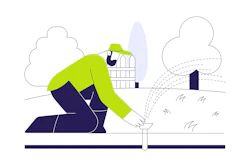
For landscapers, fixed-schedule spray irrigation, like overhead spray, has been the standard. The challenge with this type of irrigation continues to revolve around two areas: equipment breakdown and water loss. Pop-up spray heads or rotor sprinklers can be easily damaged by careless foot traffic. Wind drift or evaporation loss can cause areas to not receive the intended water amount, which can have damaging effects on the terrain. The EPA estimates that up to 50 percent of outdoor irritation is lost due to wind evaporation and/or runoff.
Controlling commercial landscape water waste is critical as increasing water costs, labor constraints, stricter regulations, and expectations for long-term landscape resilience converge.
The Healthy Green Spaces Initiative reports that 30 to 60 percent of irrigation water is wasted due primarily to overwatering and poor maintenance practices. The EPA also notes that outdoor water use accounts for 5 to 30 percent of commercial/institutional facilities’ total water use and that improved irrigation systems could save a property more than half its outdoor water use. Controlling commercial landscape water waste is critical as increasing water costs, labor constraints, stricter regulations, and expectations for long-term landscape resilience converge.
Over the past few years, water bills have continued to rise nearly 25 percent. Every gallon of water lost to inefficiency that isn’t directly working is money going down the drain. The EPA estimates that 63 percent of irrigation systems operate at pressures higher than the recommended operating pressures for the spray nozzles. A little water waste, compounded over time, amounts to a substantial cost that could be saved and put to better use elsewhere in the operations. It’s critical for landscapers to seek solutions that will not only address the inefficiencies of existing infrastructure but also keep pace with the growing regulations being enacted across the nation.
Water Regulations Forcing Restrictions
For drought-stricken regions in the U.S., a rising tide of water regulations is being implemented that directly affects how much water is used. This is forcing many property managers and landscapers to rethink their approach to irrigation. California’s MWELO (Model Water Efficient Landscape Ordinance) is a framework that is designed to improve water efficiency in landscaping, establishing standards on how landscapes are designed, installed, and maintained. As a result, water efficiency is no longer being seen as an option. These types of regulations prioritize water budgets, efficient irrigation technologies, and climate-responsive management.
In the coming years, the regulatory environment surrounding commercial landscapes will continue to change. One of the most significant developments is Assembly Bill 1572 (AB1572), which could fundamentally change how commercial landscapes will be managed. The law would prohibit the use of potable water to irrigate non-functional turf across commercial, industrial, institutional, municipal, and HOA common-area properties, with implementation deadlines beginning in 2027. Increasing scrutiny of how water is used requires increased justification that ensures the highest efficiency methods are used, which is becoming the standard. Landscapers are tasked with maintaining these spaces while complying with the changing standards that prioritize water efficiency and eliminate water waste.
The Future Points Toward Precision Irrigation
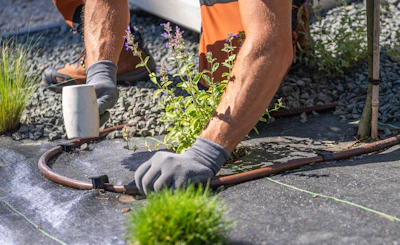
When looking at existing modes of irrigation, transitioning toward a system that is designed to maximize water use and eliminate waste is ideally what landscapers are looking for. Precision will help eliminate many of the issues with traditional irrigation, like overspray, water runoff, or evaporation. Modernized irrigation systems, such as drip irrigation, can pair soil moisture sensors with weather-based controllers to deliver the exact amount of water when it's needed most. These technologies help address many of the existing inefficiencies while also aligning to regulations that are being implemented.
As the climate continues to increase pressure on the water market, commercial spaces will require creative solutions that meet the expectations of tenants for vibrant green spaces.
Beyond regulatory and water-saving implications, drip irrigation also saves money, providing building operators with a means to relieve economic stress. Because precision irrigation only uses what is necessary, the water savings convert into actual dollars being saved over time. Depending on the type of drip, the lines can be laid underground, which would reduce repair costs by putting the system beyond the reach of foot traffic. Automation can also eliminate the need for labor to manually adjust these systems. These outcomes ultimately help landscapers better manage their systems and their green spaces, improving operational costs while maintaining the building’s beauty.
As the climate continues to increase pressure on the water market, commercial spaces will require creative solutions that meet the expectations of tenants for vibrant green spaces. This will ultimately force landscapers to examine practices and implement solutions like precision irrigation to maximize water use and eliminate water waste. When looking at the volatile market, the move toward efficiency benefits everyone, from building owners to landscapers to occupants and even the public who enjoy these spaces.
Ultimately, preserving vibrant commercial landscapes will require more than simply applying additional resources; it will require using those resources more intelligently. Organizations that embrace precision irrigation, automation, and efficient system design today will be better positioned to navigate rising costs, evolving regulations, and increasing expectations for long-term landscape performance.