Post-construction turf fails because heavy equipment compacts soil, removes topsoil, and creates drainage problems that prevent roots from thriving. The solution requires diagnosing the soil profile first, fixing compaction and drainage issues, then rebuilding a proper root zone with at least 6 inches of well-amended soil before seeding or sodding.
- Construction damage compacts soil, strips topsoil, traps water, and restricts root growth within days
- Diagnosis first—dig test holes, check for compaction with a soil probe, and conduct lab testing for pH, nutrients, and organic matter before seeding
- Target 6 inches of well-amended rooting soil; break compaction with deep ripping before adding new topsoil
- Add 1-2 inches of compost when soil organic matter is below 3 percent to restore soil structure and biological activity
- Schedule soil work before seeding—complete all heavy construction traffic, then fix drainage and compaction, then place topsoil last
New construction can leave turf with a terrible starting point. Topsoil gets stripped. Heavy equipment compacts what remains. Final grading can trap water. These conditions make it harder for water to absorb into the soil and for roots and beneficial soil organisms to thrive.
To save time, let’s stop here and say the answer isn’t “more seed.” Diagnose the soil profile first. Fix drainage and deep compaction. Then rebuild a continuous root zone with suitable soil or amendments. Protect that work from construction traffic. For turf, about 6 in. of well-amended rooting soil is a practical baseline.
Why New Sites Fight Turf
Construction can change a soil profile in a matter of days.
The site needs correction before the grass is expected to perform.
The culprits are obvious. Heavy machinery, topsoil removal, construction debris, contamination, and organic-matter loss are all common problems on construction sites. Compaction squeezes pore space. That slows infiltration and restricts roots. Construction debris can also change the soil chemistry. Cement-based materials, for example, can raise soil pH.
That is why a thin layer of nice-looking soil can be misleading. You may have 2 in. of decent material sitting over dense subsoil. Water reaches that compacted layer and slows down. Roots do the same. The turf may look acceptable for a few weeks. Then summer arrives.
Drainage problems are another warning sign. A problem sign is turf where water remains puddled for 24 hours or longer. The site needs correction before the grass is expected to perform.
Diagnose Before You Seed
Start simple.
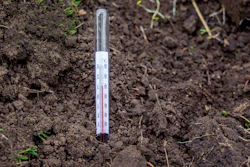
Bring a shovel, a soil probe, and your eyes. Dig several test holes across the site. One hole is not enough on a construction project. Disturbed soils can vary dramatically within a short distance.
Look for missing topsoil. Check for abrupt layers. Watch for rock, concrete, buried debris, and wet zones.
Push a screwdriver or soil probe into moist soil. A sudden increase in resistance deserves a closer look. For larger projects, a cone penetrometer provides a better measurement.
For severely disturbed sites, the Natural Resources Conservation Service provides a useful specification benchmark. Its urban-soil guidance calls for reducing soil resistance below 1,400 kPa, or about 200 psi, through 20 in. where deep subsoiling is required. (See section 3.1.3 on page 9.) That is a project-specification example, not a universal turf threshold.
Check moisture before you till. Squeeze a handful of soil. If it forms a ball and will not crumble, wait. Tilling wet clay can destroy structure and leave clods that persist for years.
You can confirm soil conditions even further with lab on-site testing kits or send samples out to a lab. Test pH, nutrients, organic matter, and soluble salts. Add texture testing when importing or blending soil. A laboratory soil test is more reliable than a home kit for making amendment decisions.
Expand testing when site history raises concerns. Demolition, industrial use, unknown fill, petroleum exposure, or heavy salt exposure should trigger a closer look at contaminants.
Fix the Root Zone, Not Just the Surface
For general turf, target about 6 in. of well-amended rooting soil. Do not frost compacted subsoil with a thin layer of topsoil — break the compaction first.
Adding too little sand to clay can actually reduce useful pore space. In some cases, it can make the problem worse.
Deep ripping or subsoiling can address compaction from construction. Do this when the soil is dry enough to fracture, and then keep heavy equipment off the repaired area afterward. Otherwise, you can undo the work almost immediately. Once drainage and compaction issues are addressed, bringing in quality topsoil can help restore the growing conditions that construction may have compromised.
Avoid creating a sharp boundary between soils. Place the first 2 to 3 inches of topsoil and mix it into the soil below. The remaining topsoil can then be placed above it. That creates a better transition for roots and water.
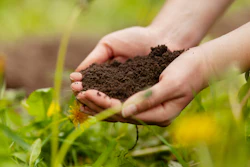
Compost can help rebuild a depleted root zone — 1 to 2 in. of compost when soil organic matter is below 3 percent is helpful. That equals roughly 3 to 6 cubic yards per 1,000 sq.ft. Mix it thoroughly into the soil.
Carbon-rich soil blends can serve the same general purpose. Organic carbon supports soil structure, infiltration, biological activity, and nutrient cycling. The blend still needs to be checked for texture, salts, nutrients, and compost quality.
Pulverized topsoil and sand blends can also be useful. They can create a more workable or specifically designed root-zone texture. But sand is not an automatic fix for clay. Adding too little sand to clay can actually reduce useful pore space. In some cases, it can make the problem worse.
Use a designed blend based on particle size and the intended use.
Screening deserves the same care. Follow the project specification. Do not assume finer is always better as aggressive screening can damage soil aggregates.
Schedule Soil Work Like a Construction Activity
Good soil work can be ruined by bad sequencing. Do not repair the root zone while heavy trades are still crossing it. Finish major underground work, hardscape, rough grading, and heavy haul traffic first. Then correct drainage and deep compaction.
Place and blend topsoil next. Complete final grading with as little re-traffic as possible. Seed or sod last. Timing matters after that.
Cool-season turf is generally easiest to seed in late summer through early fall. Warm-season turf is best established in late spring and into early summer. Exact dates vary across the country, so use local Extension guidance for the project location. If the construction schedule misses that window, say so.
Sod may provide more scheduling flexibility than seed. It can also reduce immediate erosion risk. It does not, however, compensate for poor soil preparation underneath.
Spend Money Where Failure Starts
Not every site needs complete soil replacement.
Seed is cheap; rework is not.
Amend when the existing soil is basically usable. Replacement or imported soil makes more sense when the profile is extremely shallow, rocky, contaminated, chemically unsuitable, or too inconsistent to repair economically. Deep compaction still needs correction before new soil goes on top.
Drainage also comes early in this process. Do not spend money on premium seed, sod, or fertilizer while water is still moving the wrong direction. For areas next to buildings, provide roughly a 1 to 2 percent grade away from the structure.
Treat soil work as a real bid item. Carry quantities for decompaction, imported soil, compost, testing, and drainage corrections. Photograph pre-existing conditions. Record test results. Agree on acceptance criteria before the turf goes down. That documentation should make the client conversation easier.
Tell the GC or owner what you found. Show the compacted layer. Show the standing water. Explain what happens if it gets covered instead of corrected.
Seed is cheap; rework is not.
Better construction soil practices can lead to easier planting, stronger initial growth, fewer plant-replacement callbacks, and lower long-term maintenance demands.
That is the practical lesson for landscape professionals. The turf installation starts long before the first seed or roll of sod arrives. It starts with the soil profile the construction process leaves behind.