Landscape and pest management professionals rely on hose reels to support essential tasks in pest control and lawn maintenance, such as pest elimination, turf fertilizing, watering, and more. These reels are essential in helping operators work quickly and effectively. They’re instrumental in increasing safety, speeding up setup and breakdown at jobsites, prolonging hose life, and increasing productivity.
They can be mounted on trucks, trailers, utility vehicles, carts, and slide-in units to vastly improve mobility and reduce effort. However, hose reels aren’t invincible. They’re constantly being unspooled and rewound while also being exposed to harsh weather conditions, which can take a heavy toll without proper care.
Safety: The Center of Every Hose Reel
Hoses are essential in pest control for spraying pesticides and fertilizing turf, but they can also present many risks when they’re not stored and deployed appropriately. Loose hoses tend to get tangled and damaged, and improperly secured hoses can leak or burst, leading to unexpected exposure to pesticides. Spills from leaky hoses also create slippery surfaces and spray hazards.
Hose reels help minimize these risks by keeping hoses neat and organized, reducing unnecessary physical strain and preserving the integrity of couplings.
Reels used in the pest elimination sector offer a range of mounting options, including installation on buildings and a variety of vehicles. By keeping hoses securely stored and off the ground, they help maintain a safer work environment while reducing the risk of trips, slips, and other workplace hazards.
Another key safety feature of high-quality hose reels is controlled rewind speeds, which minimize potential unwind and rewind injuries. Often, built-in safety systems are built-in to ensure the reel works at a safe and steady pace, such as chain-and-sprocket drives, as well as declutching arbors and cam-lock drag brakes, which provide adjustable, personalized drag that can be tailored to each user, preventing unintended free-spooling for a safe and neat payout of the hose.
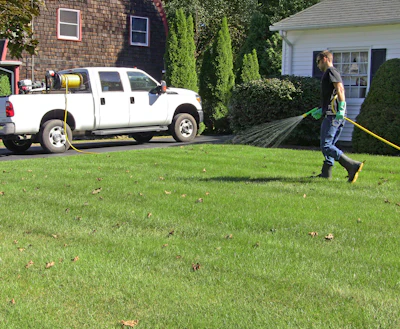
 A Hannay hose reel mounted on the truck for Upstate Bug Busters.Hannay Reels
Designed for the Long Haul
There are simple steps exterminators and pest control technicians can take to keep hose reels working their best day after day. At the start of every day, users should visually inspect the reel to confirm that all connection points are snug, including the nozzle to the hose, the hose to the reel, and the reel to the mounting base.
To verify the mechanical parts of the reel are sound, users should make sure the frame is structurally stable and all visible nuts and bolts are fastened properly. It’s also important to carefully inspect the reels to pinpoint any corrosion or abrasion that may be occurring.
Next, it’s critical to test the operation of the reel, observing how smoothly the hose unwinds from and retracts back onto the reel. Excessive friction when unwinding and rewinding the hose reel means individual components need to be examined further and serviced.
For example, bearings support smooth, low-resistance unwinding and rewinding while fortifying the axle hub and managing high pressures, so they should be periodically maintained with a proper lubricant. It’s time to replace the bearings when the reel encounters significant resistance, makes a grinding or squealing noise, or vibrates excessively while rotating.
Chains and sprockets used on power rewind reels are vital for reels working when needed. Rusted or corroded links and excessive slack in the chain are causes for concern. The chain may need to be replaced if it jerks or makes excessive noise while moving.
For reels with chain drives, optional guards are available to protect the chain from the elements and operators from injury. It is necessary to replace if it becomes damaged.
Some pest control reels feature a spring-powered rewind, which automatically retracts the hose while maintaining tension that locks the hose at a desired length. Tension adjustments may be necessary at times, but it also may be time to replace the spring if the retraction is weak or tension is lacking after adjustments are made.
Even nuts and bolts need to be regularly inspected and maintained. They’re primarily used to securely mount the frame of the hose reel to the deck of a vehicle, but they also fasten various internal components within the reel assembly. They must be checked regularly to ensure everything remains tight and secure, and any corroded fasteners should be replaced immediately.
Check the swivel joint to make sure it is in proper working condition, swinging freely and fully from side to side. Always follow the manufacturer’s recommendations on maintenance and lubrication.
It’s important to replace hose reel components with genuine parts from the reel manufacturer. High-performance reels are precisely designed, custom-manufactured, and extensively tested to maximize the performance and life of a hose reel, and service parts are specifically designed and manufactured to maximize value and productivity.
Choosing the Right Reel for the Job
While regular maintenance can extend the life of hose reels, selecting a reel specifically tailored for your operations can help minimize the service it will need over a lifetime.
Not all hose reels are made the same. Operations can tailor their reels to meet their specific needs, offering the features necessary for demanding daily use. For example, reels designed for pest control can be constructed from a variety of high-grade materials, such as steel, stainless steel, and aluminum. This heavy-duty construction is recommended for both indoor and outdoor settings to withstand harsh winters and hot summers, dusty and muddy worksites, and exposure to chemicals and other corrosive materials. Pest control reels are available in a variety of mounting configurations, providing the mobility users need to access hard-to-reach locations. Since many pest-related jobs are off the beaten path, technicians need hose reels that can handle long lengths of hose and can be wheeled or carried to remote, inaccessible areas.
Hose reels can also be customized for temperature and pressure hose ratings to meet specific job requirements. Other heavy-duty upgrade options are also available.
To accommodate the limited space available on trucks, trailers, or slide-in units, leading manufacturers offer hose reels mounted in stackable frames, also called stacking kits. Stackable frames are compact and allow for different applications and rewind preferences, such as manual or power rewind configurations.
Your reel purchase should be well-thought-out, and your unique operations need to be considered. Selecting the right reel can increase your safety and productivity while minimizing costly repairs and downtime if regularly maintained.