In the landscaping industry, time is one of the few resources that never seems to be in surplus. Weather can compress schedules without warning, customer expectations remain high and crews are often expected to cover more ground with the same number of people and machines. In that environment, every decision that affects productivity matters.
Speed has long been an important part of that conversation, and for good reason. The ability to cover ground efficiently helps landscape professionals maximize productive hours and keep pace with demanding schedules. But experienced operators know that making the most of available time requires more than speed alone. It requires equipment that helps maintain efficiency throughout the workday and remains ready to perform throughout the season.
Speed Creates Opportunity
When landscape professionals evaluate mowers, performance is often one of the first factors they consider. Faster mowing speeds can help crews cover large properties more efficiently and complete more work within limited weather windows. Most commercial properties, however, present a variety of challenges, with highly landscaped areas such as enhanced beds, irrigation systems, trees and fencing that require operators to make constant adjustments. The challenge isn't simply reaching top speed. It's maintaining efficient progress as conditions change throughout the property.
Mowers that have their own flexibility also create efficiency for their operators.
A mower that combines performance with responsive handling and predictable operation helps crews spend less time repositioning, correcting mistakes, or navigating difficult areas. A clean cut on the first pass reduces the need for rework, while maneuverability around obstacles can minimize trimming and touchups. Individually, those time savings may seem small. Across dozens of properties and an entire season, they can create meaningful gains in efficiency and output.
Those gains can translate into additional capacity. Completing jobs more efficiently may create opportunities to take on additional work, recover more quickly from weather delays, or build greater flexibility into an already demanding schedule.
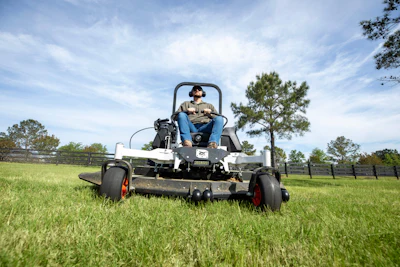
Mowers that have their own flexibility also create efficiency for their operators. Crews come in various shapes and sizes, and with adjustable features like control lever and seat positioning, along with other tool-less adjustments such as deck lift levers and seat weight controls, mowers can be quickly adapted to the correct, comfortable positioning of the operator. With these items being fast, tool-less operations, mower operator switchover takes minimal time on the site.
 Bobcat Company
Productivity Continues Beyond the Property
One of the most overlooked aspects of productivity is that it extends beyond the time spent actively mowing. Landscape businesses operate on tight schedules. When equipment is unavailable due to unexpected repairs or extended maintenance, that disruption can affect routes, workloads, and customer commitments. A high-performing mower creates value in the field, but it also needs to be available when work needs to get done.
Uptime becomes a productivity feature because less time spent dealing with preventable disruptions means more time spent completing work.
When considering mowers, look for characteristics that minimize time for repairs and regular maintenance tasks. Features like tool-less oil drains and tool-less access covers help drive the upkeep to uptime.
A mower that cuts quickly but spends excessive time in the shop doesn't help crews stay on schedule. Over the life of the machine, availability can have just as much influence on operational efficiency as performance itself. Reliability, durability, and maintenance accessibility all contribute to keeping equipment ready to work when opportunities arise. In that sense, uptime becomes a productivity feature because less time spent dealing with preventable disruptions means more time spent completing work.
Built for Fast. Built to Last.
Performance and durability are often discussed as separate attributes, but landscape professionals experience them together every day. Speed helps crews cover ground efficiently and maximize productive hours. Durability helps ensure that capability remains available season after season. One creates opportunity; the other helps sustain it.
Ultimately, time is the advantage every landscape professional is trying to maximize. Equipment that delivers efficient performance, dependable reliability and consistent uptime helps owners make the most of that time by supporting productivity, minimizing interruptions and keeping work moving forward. For contractors, that can mean additional jobs completed, greater scheduling flexibility and more opportunities to grow their business.