Many buyers wait until mowing season approaches to replace or upgrade their mower. The off-season offers an opportunity to make a more strategic purchase without rushing the decision.
Choosing a mower should go beyond deck size or sticker price. Operator comfort, productivity, property needs, dealer support, and total cost of ownership all deserve consideration. Buying the right machine means thinking about how it will perform not just on day one, but over years of regular use.
Start with the Property, Not the Machine
Before comparing models, start by defining what the mower will need to do. The amount of land being maintained is important, but acreage alone does not tell the whole story. A contractor maintaining several smaller properties may have different needs than an operator maintaining one or two large sites.
Flat, open areas may allow a wider deck to cover ground efficiently. Properties with slopes, uneven terrain, gates, trees, landscaping, and other obstacles may be better suited to a smaller, more maneuverable mower.
Regional growing conditions should also factor into the decision, since faster grass growth can mean more frequent mowing and more hours on the machine over the course of a year. Considering the entire workload helps buyers avoid assuming that a bigger or more powerful mower is automatically the better choice.
Look Beyond Speed to Find Productivity
Once the workload is clear, the next step is to think about productivity. Acres per hour can be a useful measure, but productivity is not simply a matter of how fast a mower travels. The right deck width can reduce the number of passes needed on open properties, while a more compact, maneuverable mower may save time where operators frequently need to navigate around obstacles or through tighter spaces.
True productivity also depends on how much time the operator can spend mowing, rather than stopping. Fuel capacity, ease of deck adjustment, and the ability to achieve a consistent cut without repeated passes can all affect how much work gets completed in a day.
Do Not Underestimate Operator Comfort
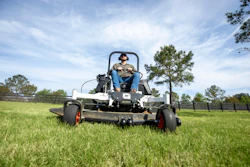
A mower that seems to be a good fit can feel different after an hour or two in the operator's seat. For operators maintaining larger properties or mowing frequently, ergonomics should be a key consideration when purchasing a new mower.
Pay attention to the seat, visibility, vibration, and overall ease of operation. Whenever possible, sit on and operate the mower before purchasing. A hands-on evaluation can reveal details that are difficult to judge through an online comparison, including how intuitive the controls are and how comfortable the operator feels when maneuvering the machine.
Comfort isn’t simply a luxury. Reducing operator fatigue can support more consistent work while helping operators remain attentive and in control throughout the day.
Consider the Total Cost of Ownership
Purchase prices are important, but they are only one part of what a mower will cost over its working life. A lower upfront price does not necessarily mean a lower long-term cost, particularly if maintenance is more frequent, parts are difficult to obtain, or dealer support is limited.
Before buying, ask about routine maintenance requirements and service intervals. Consider how easily common maintenance tasks can be completed, what warranty coverage is included, and how readily replacement parts are available. Buyers should also think about durability and expected usage. A mower that will accumulate significant hours each season may justify a larger upfront investment if it offers the durability, serviceability, and support needed to remain productive over time.
Your Dealer Should Be Part of the Buying Decision
You don't know what you don't know. A knowledgeable dealer can help turn questions about acreage, terrain, workload, and operator preferences into a more informed equipment decision, while also identifying maintenance and service considerations that may not be obvious from an online product comparison. Visiting a dealership also gives buyers the opportunity to compare equipment in person and, when possible, operate different models side by side. This firsthand experience can help determine which mower feels most comfortable and best suited to the property and tasks at hand.
Just as important, the dealer relationship continues after the mower leaves the lot. Access to parts, service, maintenance guidance, and knowledgeable support becomes increasingly valuable as the machine accumulates hours and maintenance or repair needs become more complex. Choosing the right mower is important, but choosing a dealer you can rely on throughout ownership should be part of the decision, too.
Use the Off-Season to Make the Decision
Instead of waiting for the first hint of spring, use the off-season to assess the properties you maintain, identify what is and is not working with your current equipment, visit dealers, and compare options. It is also a good time to discuss anticipated equipment needs, availability, and service considerations with your dealer.
Starting early creates time to ask follow-up questions, operate different machines, and weigh tradeoffs without feeling forced to make a decision simply because the grass is already growing.
The best mower is the one that fits the property, workload, and operator. Evaluating comfort, productivity, total cost of ownership, and long-term support gives buyers a more complete picture than specifications or purchase prices alone. Look beyond what a mower can do on paper and consider how well it will perform for your specific needs over time.